
 English
 中文简体
中文简体 русский
 Español
 Français
When Did Plastic Food Container Moulds Emerge and Develop?
Historical Emergence: The Beginning of Plastic Food Container Moulds
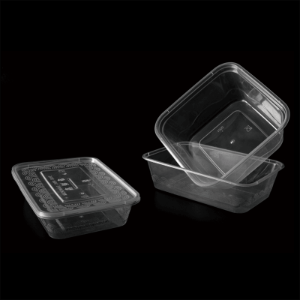
Plastic food container moulds emerged alongside the development of plastic materials in the 20th century.
Early Plastics: In the mid-1900s, plastics such as polyethylene (PE) and polystyrene (PS) became widely available. These materials were lightweight, moldable, and resistant to moisture, making them suitable for food packaging.
Initial Moulds: Early moulds were designed to produce simple container shapes, such as boxes, trays, and cups. These moulds were primarily used for disposable packaging to replace glass or metal containers, which were heavier and more fragile.
Function: The initial moulds allowed manufacturers to produce containers in large quantities, ensuring consistent shapes and sizes. This was important for both food safety and convenience in transportation and storage.
Significance: The emergence of plastic food container moulds marked a transition from traditional packaging materials to more versatile and cost-effective solutions, setting the foundation for future developments.
Early Material Selection: From Basic Plastics to Improved Polymers
The choice of plastic material in the moulding process significantly influenced container performance and durability.
Polyethylene and Polystyrene: Early food containers were mainly made from low-density polyethylene (LDPE) and polystyrene (PS). LDPE offered flexibility and moisture resistance, while PS provided rigidity and transparency.
Polypropylene (PP): With technological improvements in polymer production, polypropylene became a popular choice due to its higher heat resistance and chemical stability. This allowed containers to be used for hot foods, microwaving, and dishwasher-safe applications.
Material Considerations: Selection of suitable plastics depended on factors such as food safety, temperature tolerance, and mechanical strength. Over time, regulatory requirements also guided material choices to ensure that containers were non-toxic and free from harmful chemicals.
Function: Choosing the right material ensures that containers meet both functional and regulatory standards while maintaining durability and usability.
Technological Improvements: Advancements in Moulding Methods
Advancements in moulding technology have significantly improved production efficiency, precision, and design flexibility.
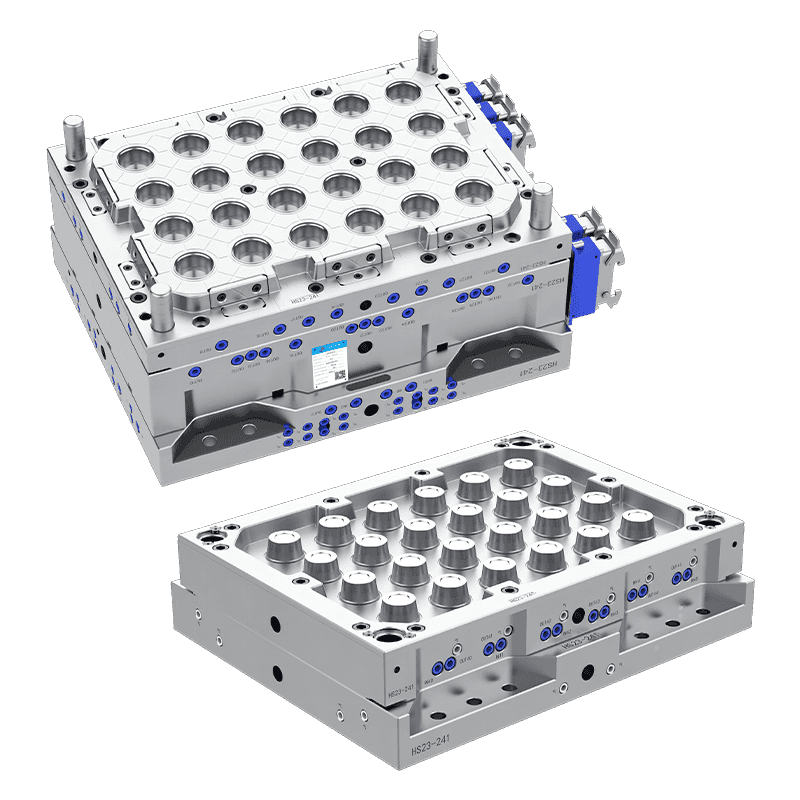
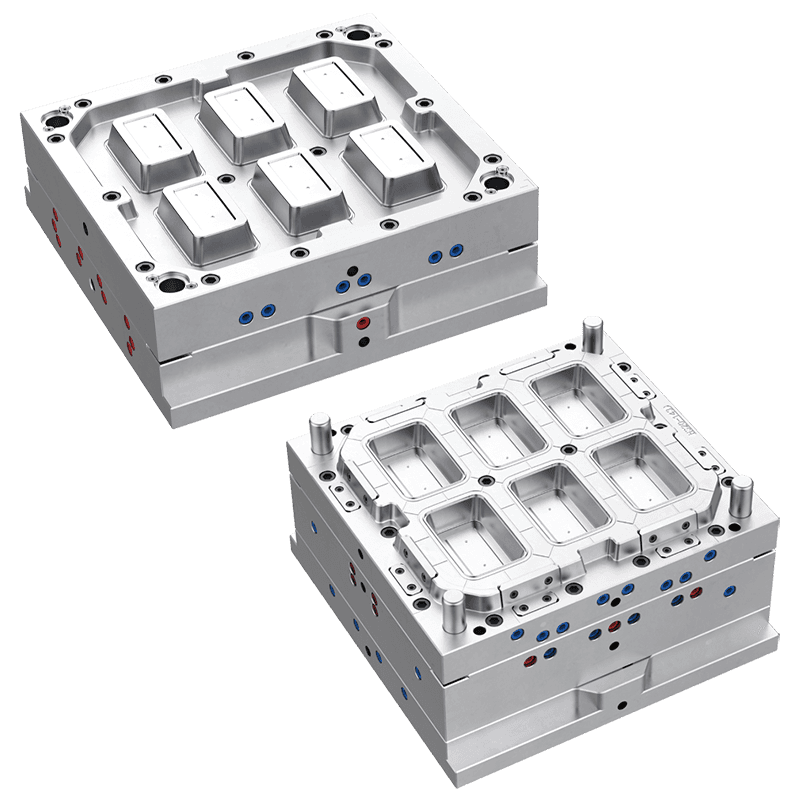
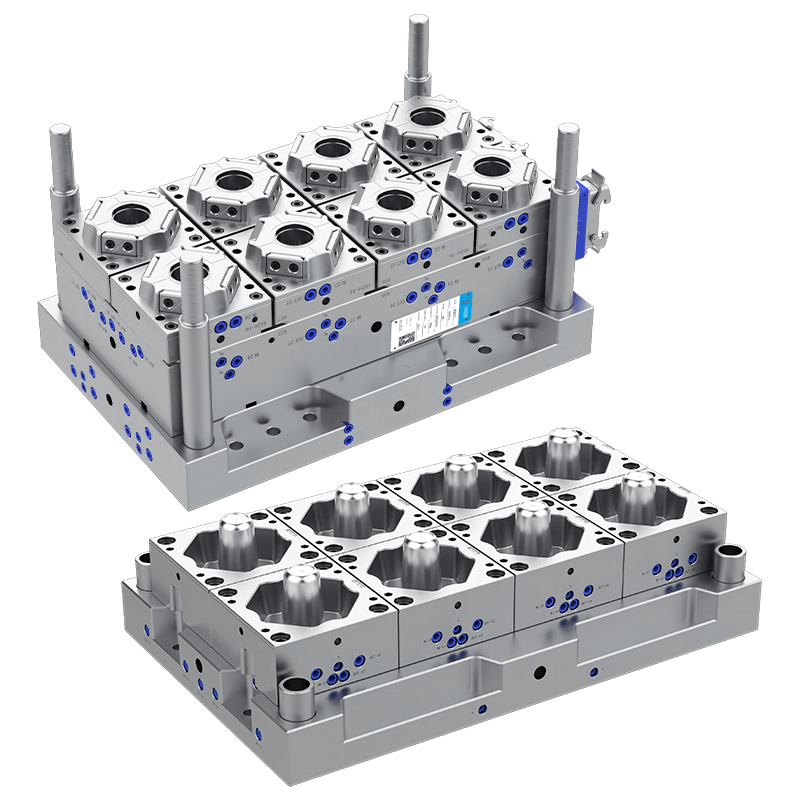
Injection Moulding: Injection moulding became a common method for producing complex container shapes. Molten plastic is injected into precise mould cavities, allowing high-speed, high-volume production.
Blow Moulding: Blow moulding, often used for hollow containers such as jars or bottles, enabled uniform wall thickness and larger capacity options.
Thermoforming: Thermoforming became popular for lightweight containers like trays and clamshells, where plastic sheets are heated and shaped over moulds.
Function: These technological improvements allowed manufacturers to produce containers with consistent quality, complex designs, and varied sizes, meeting diverse consumer and industrial requirements.
Modern Innovations: Design, Sustainability, and Automation
In recent decades, plastic food container moulds have undergone further development to address efficiency, sustainability, and customization.
Automation: Computer-aided design (CAD) and automated moulding machines allow precise production, reducing errors and labor costs.
Sustainable Materials: Manufacturers increasingly use recycled plastics and biodegradable materials to meet environmental standards and consumer demand for eco-friendly packaging.
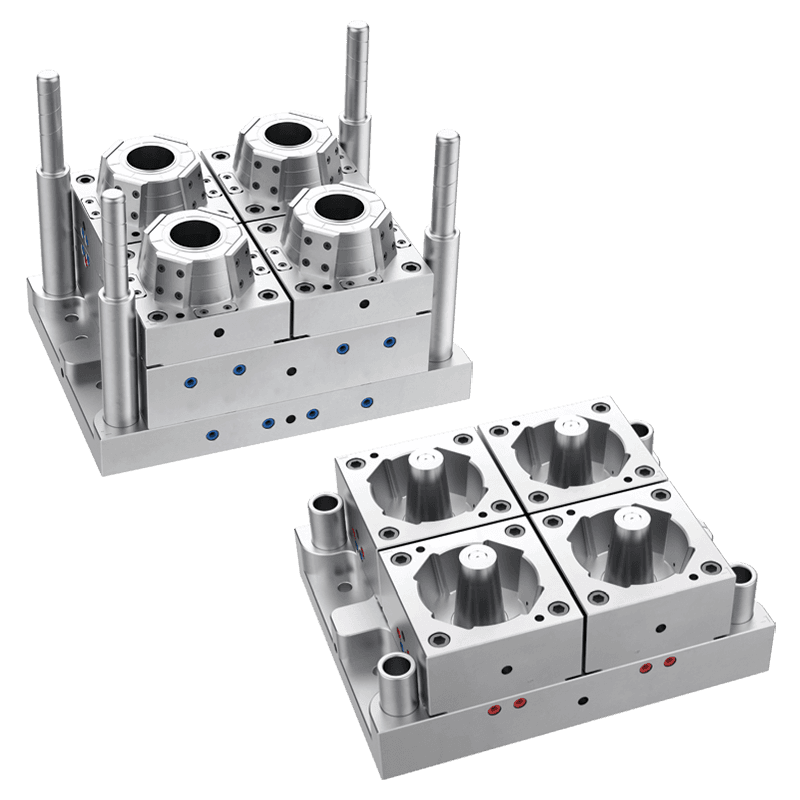
Customized Designs: Modern moulds can produce containers with specialized features, such as airtight lids, compartmentalized sections, or ergonomic shapes for ease of use.
Function: These innovations improve container functionality, support environmental responsibility, and provide manufacturers with flexibility to respond to market trends and regulatory requirements.
Contact Us
Email: [email protected]; Or fill out the contact form below.

Yongkang Huashun Mould Co., Ltd. is a technology-based enterprise specializing in the production of thin-walled injection molds.
PRODUCT
- Disposable Plastic Round Food Container Moulds
- Disposable Plastic Square Food Container Moulds
- Disposable Bubble Tea Plastic PP Cup Mould Series
- Disposable Plastic Knife Fork And Spoon Mould Series
- Disposable Plastic Multi-grid Food Container Mould Series
- Disposable Plastic Portion Cup Mould Series
- Disposable Plastic Cup Mould Series
 Email:
  Phone: +86-18067655796
 Tel: +86-0579-87137609
 Add: No. 218, Shangpu Road, Yongkang Economic Development Zone, Jinhua City, Zhejiang Province, China


