
 English
 中文简体
中文简体 русский
 Español
 Français
What are the main functions of Food Container Mold?
The Food Container Mold performs several critical and interdependent functions during the injection molding process.
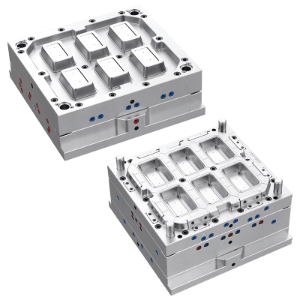
Forming the Container Shape and Structure
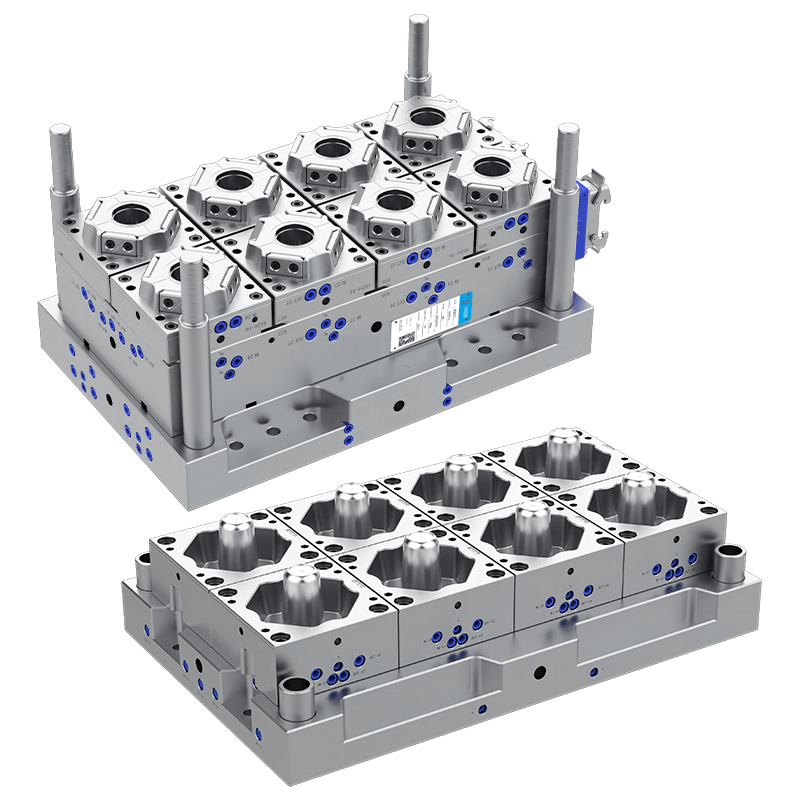
The primary function is to define the physical geometry of the container. The mold's cavity and core create the container's walls, base, lid, and any integrated features like handles, stacking ribs, or sealing flanges. It determines the container's volume, wall thickness for structural integrity, and overall dimensions.
Creating Functional and Aesthetic Features
Beyond basic shape, the mold imparts features necessary for utility. This includes forming the threads for a screw-on lid, the groove for a snap-on lid, venting channels for microwave use, or textured surfaces for grip. The mold's cavity surface finish also directly transfers to the plastic, providing a glossy, matte, or patterned aesthetic.
Ensuring Consistent Production and Dimensional Accuracy
A core function is to enable mass production of identical units. The mold ensures that every container produced has the same precise dimensions, which is critical for assembly-line filling, sealing, and stacking. This consistency guarantees that lids fit perfectly and that containers stack securely during transport and storage.
What are the uses of Food Container Mold?
These molds are used to manufacture a wide array of products for both consumer and commercial food sectors.
Packaging for Retail and Takeaway
This is the common application. Molds produce containers such as deli containers for salads and prepared foods, clamshell containers for burgers and bakery items, and soup and noodle cups. These items are designed for single-use or short-term storage and are ubiquitous in grocery stores, restaurants, and food delivery services.
Storage Solutions for Household and Commercial Kitchens
Molds also create reusable food storage products. This includes modular food storage boxes with locking lids for pantry and refrigerator organization, larger bulk storage bins for dry goods in commercial kitchens, and specialized containers like berry baskets or meal prep trays. These products are typically made from more durable plastics and are designed for repeated use.
Disposable Serviceware
Another significant category is single-use service items. Molds produce plates, bowls, and portion cups used in catering, cafeterias, and outdoor events. While functionally similar to retail packaging, these items are often simpler in design, prioritizing cost-effective, high-speed production for large-volume disposable use.
What are the advantages of Food Container Mold?
The use of dedicated injection molds for food containers provides several tangible benefits in manufacturing and product performance.
The advantage is high-volume production efficiency. Once the mold is installed in an injection molding machine, it can produce a finished container every few seconds. This allows for the manufacture of millions of units at a very low per-unit cost, making disposable and affordable reusable containers economically viable. This method supports the scale needed for global food distribution.
A related advantage is exceptional product consistency and quality control. Every container from the same mold is dimensionally identical. This uniformity ensures reliable performance on high-speed filling and sealing lines, reduces waste from misfits, and provides a predictable consumer experience regarding lid fit and container strength.
The process allows for integrated design complexity. Multiple functional elements—such as a hinged lid, tamper-evident band, and stacking feature—can be formed in a single molding cycle. This "all-in-one" manufacturing reduces or eliminates the need for secondary assembly processes, lowering labor costs and potential points of failure.
From a material and safety standpoint, injection molding facilitates the use of certified food-grade plastics. The process allows for the controlled use of materials like polypropylene (PP), polyethylene (PE), or polyethylene terephthalate (PET), which are approved for food contact and can be selected for specific properties like clarity, flexibility, or microwave safety. The mold itself, when properly maintained, produces containers with smooth, non-porous surfaces that are easy to clean and resist harboring bacteria.
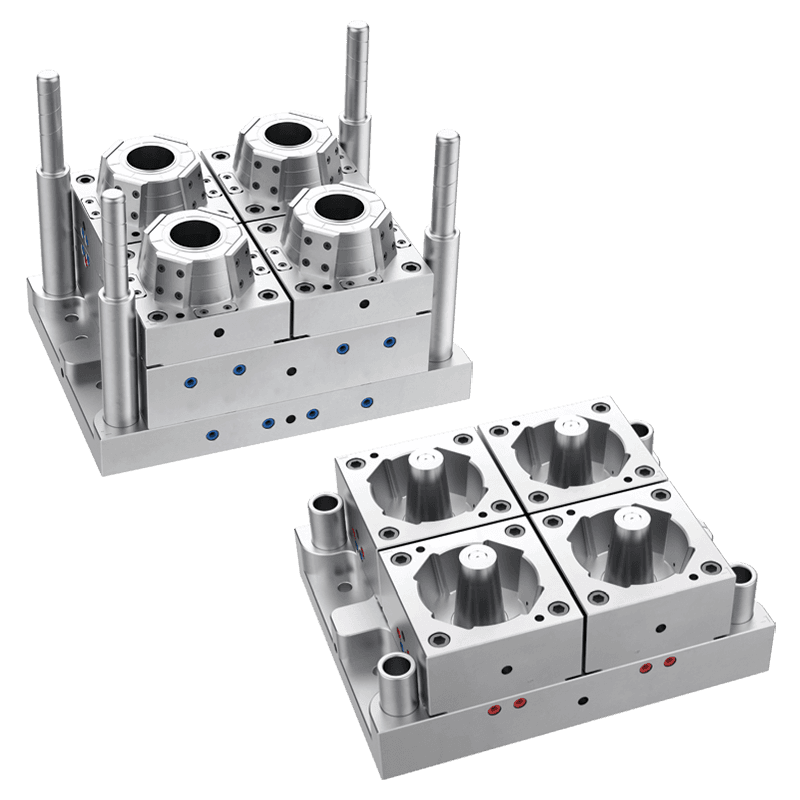
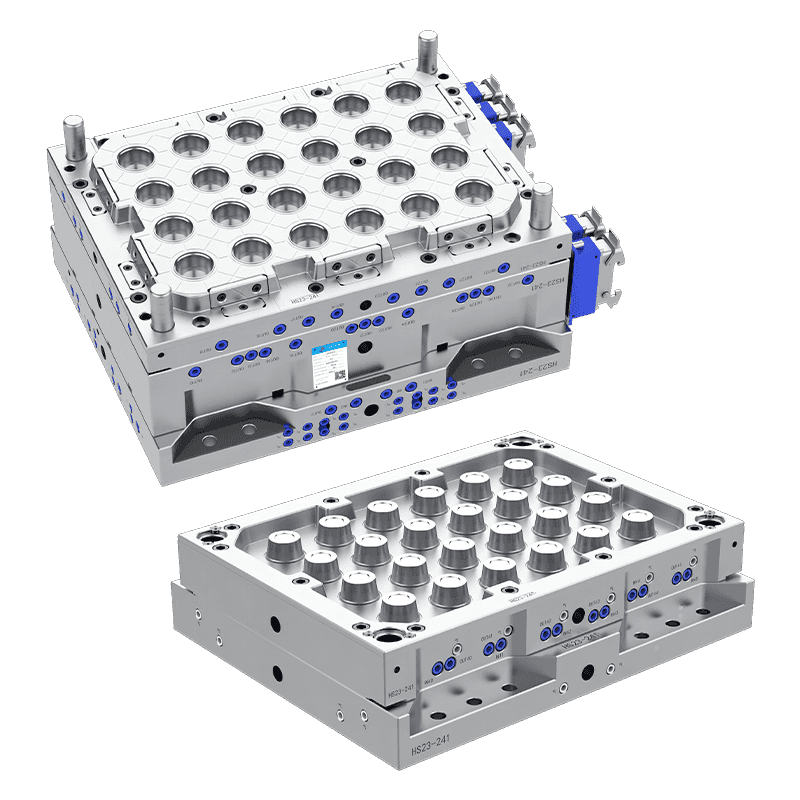
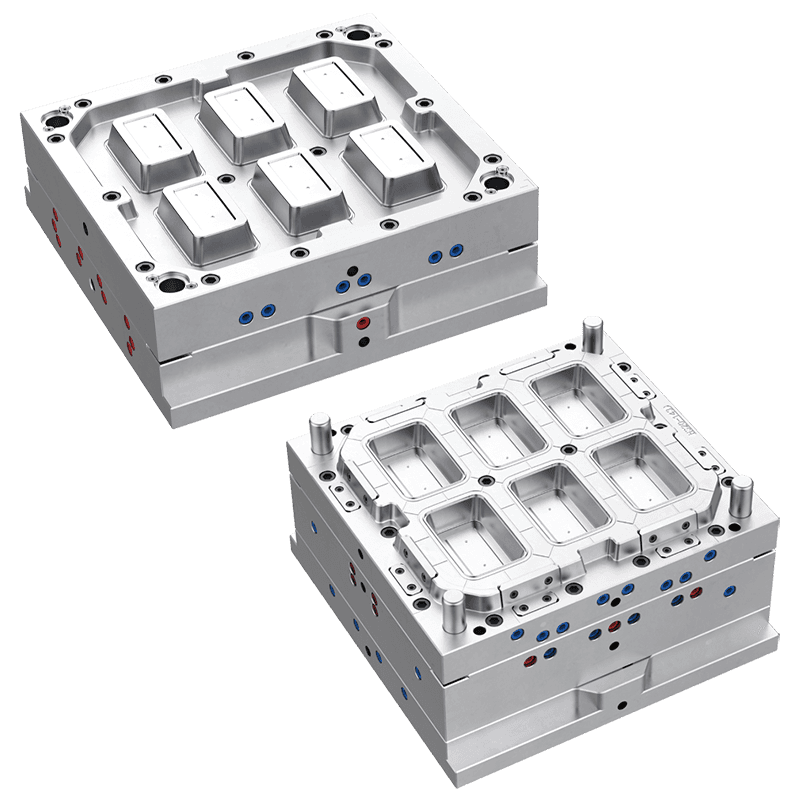
Contact Us
Email: [email protected]; Or fill out the contact form below.

Yongkang Huashun Mould Co., Ltd. is a technology-based enterprise specializing in the production of thin-walled injection molds.
PRODUCT
- Disposable Plastic Round Food Container Moulds
- Disposable Plastic Square Food Container Moulds
- Disposable Bubble Tea Plastic PP Cup Mould Series
- Disposable Plastic Knife Fork And Spoon Mould Series
- Disposable Plastic Multi-grid Food Container Mould Series
- Disposable Plastic Portion Cup Mould Series
- Disposable Plastic Cup Mould Series
 Email:
  Phone: +86-18067655796
 Tel: +86-0579-87137609
 Add: No. 218, Shangpu Road, Yongkang Economic Development Zone, Jinhua City, Zhejiang Province, China


