
 English
 中文简体
中文简体 русский
 Español
 Français
What Are the Characteristics of Thin Wall Injection Moulding?
Product Design: Importance of Geometry and Wall Thickness
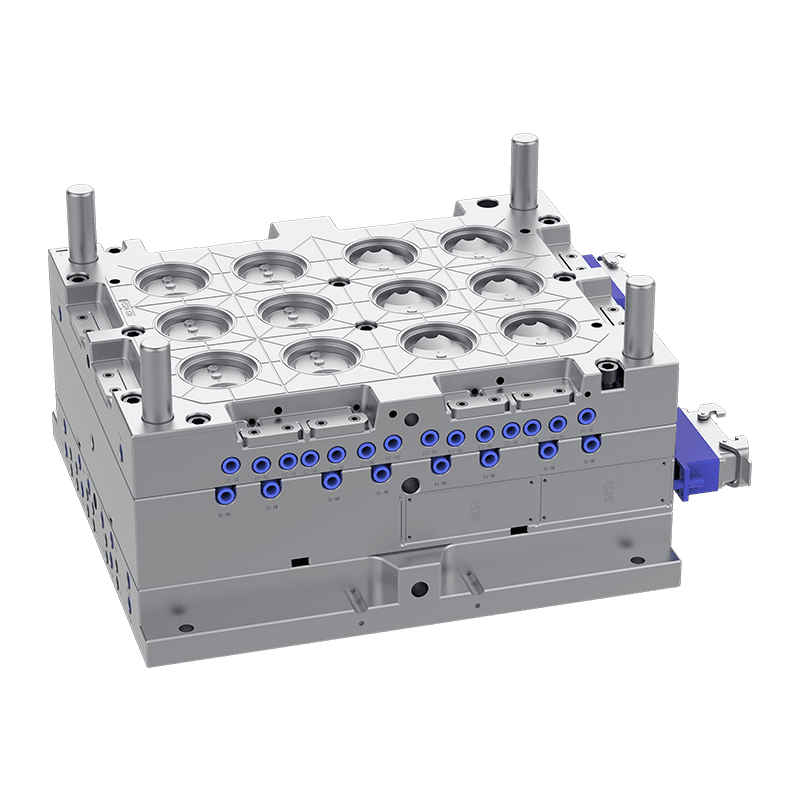
The design of components is a key factor in thin wall injection moulding.
Wall Thickness: Thin wall components typically have wall thicknesses ranging from 0.4 mm to 1.5 mm. Uniform wall thickness is essential to prevent warping, sink marks, or incomplete filling during moulding.
Rib and Support Structures: Designers often incorporate ribs, gussets, or reinforcements to maintain structural strength while material usage. These features enhance rigidity and prevent deformation under load.
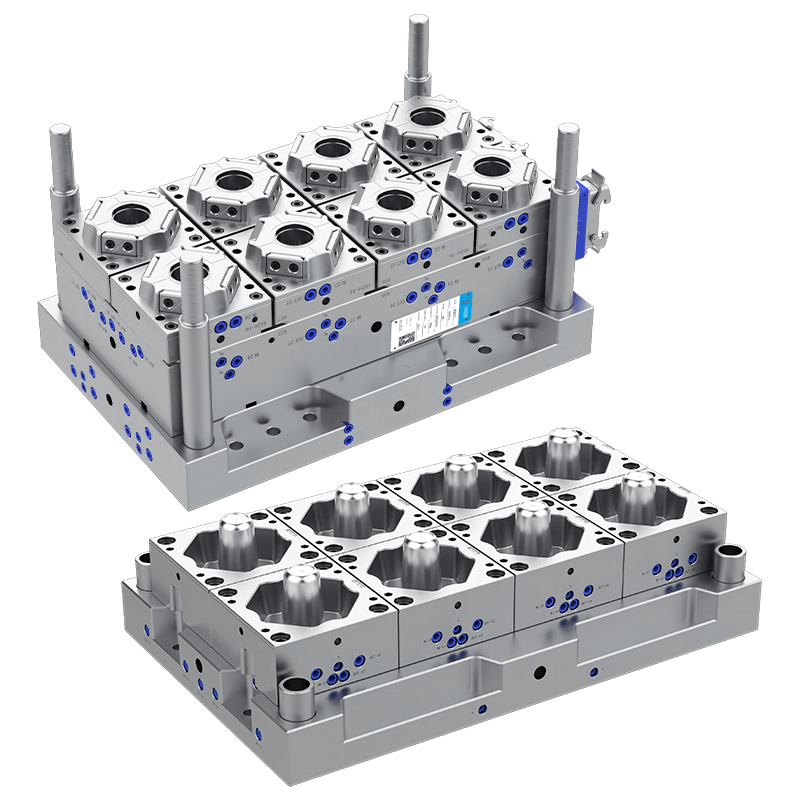
Flow Path Considerations: The geometry of the mould must allow plastic to flow smoothly into narrow cavities. Sharp corners, sudden changes in thickness, or long flow paths can result in incomplete filling or weak points.
Function: Proper product design ensures that thin wall components achieve the desired shape, strength, and functionality while maintaining manufacturability.
Material Requirements: Selection for Flow and Strength
The choice of plastic material significantly affects the success of thin wall injection moulding.
High Flow Plastics: Materials with low melt viscosity, such as polypropylene (PP), polystyrene (PS), or acrylonitrile butadiene styrene (ABS), are preferred. High-flow plastics can fill thin cavities quickly without excessive pressure.
Mechanical Properties: Despite thin walls, materials must retain sufficient strength, impact resistance, and dimensional stability. Additives such as fillers or reinforcements may be used to improve rigidity.
Thermal Considerations: Heat-resistant plastics may be required for applications where components will be exposed to elevated temperatures. Materials should allow rapid cooling without warping.
Function: Selecting the appropriate material ensures that thin wall components are strong, functional, and capable of consistent production in demanding applications.
Process Control: Precision in Injection Parameters
Thin wall injection moulding requires careful control of processing parameters to achieve high-quality components.
Injection Speed and Pressure: High injection speed is necessary to fill thin cavities before the plastic solidifies. High injection pressure ensures complete filling and minimizes short shots or voids.
Cooling Time: Thin walls allow faster heat dissipation, but uneven cooling can cause warping or internal stress. Cooling channels must be designed to promote uniform temperature distribution.
Mould Temperature: Maintaining a precise mould temperature helps control shrinkage, surface finish, and dimensional accuracy.
Function: Precise process control ensures that thin wall parts are consistently produced with the correct shape, surface finish, and mechanical properties, reducing defects and waste.
Production Efficiency: Speed, Material Savings, and Automation
Thin wall injection moulding offers efficiency advantages but also requires advanced equipment.
Cycle Time Reduction: Thin wall parts cool faster than thicker components, allowing shorter cycle times and higher production rates. This is particularly valuable in high-volume industries such as packaging and consumer products.
Material Savings: Reduced wall thickness decreases material usage, lowering production costs and contributing to lighter, more sustainable products.
Automation Compatibility: Thin wall production often involves automated handling, robotic ejection, and assembly to maintain consistent quality and reduce labor requirements.
Function: Efficient production methods improve output, reduce costs, and enable manufacturers to respond to high-demand markets effectively.
Component geometry and uniform wall thickness ensure structural integrity and manufacturability. Materials with high flow, mechanical strength, and thermal stability support reliable thin wall production. Precise control of injection speed, pressure, cooling, and mould temperature is necessary to avoid defects. Finally, the process enhances production efficiency through shorter cycle times, reduced material consumption, and automation. Understanding these characteristics allows manufacturers to produce lightweight, precise, and functional plastic components suited to modern industrial and consumer applications.
Contact Us
Email: [email protected]; Or fill out the contact form below.

Yongkang Huashun Mould Co., Ltd. is a technology-based enterprise specializing in the production of thin-walled injection molds.
PRODUCT
- Disposable Plastic Round Food Container Moulds
- Disposable Plastic Square Food Container Moulds
- Disposable Bubble Tea Plastic PP Cup Mould Series
- Disposable Plastic Knife Fork And Spoon Mould Series
- Disposable Plastic Multi-grid Food Container Mould Series
- Disposable Plastic Portion Cup Mould Series
- Disposable Plastic Cup Mould Series
 Email:
  Phone: +86-18067655796
 Tel: +86-0579-87137609
 Add: No. 218, Shangpu Road, Yongkang Economic Development Zone, Jinhua City, Zhejiang Province, China


