
 English
 中文简体
中文简体 русский
 Español
 Français
Types of Spoons Produced by Spoon Molds
Plastic spoon molds can produce a wide range of spoon types, differing in size, shape, material, and intended application. The mold cavity determines the final geometry, and interchangeable inserts allow different spoon styles from the same mold base.
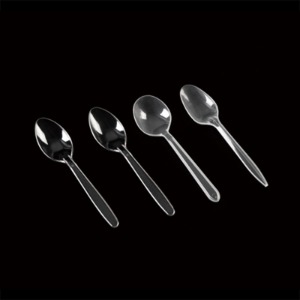
Teaspoons: Standard small spoons for stirring beverages or eating desserts. Typically, 120 to 150 millimeters in length. Molds for teaspoons often have multiple cavities—16, 24, or 32 cavities per mold—to maximize output.
Tablespoons: Larger spoons for serving or eating main courses. Length typically 180 to 220 millimeters. Molds for tablespoons have fewer cavities due to larger part size, typically 8 to 16 cavities.
Soup Spoons: Round-bowled spoons with deeper concave sections. Designed for liquid dishes. The bowl depth requires careful mold design to ensure uniform wall thickness and prevent sink marks.
Measuring Spoons: Precisely sized spoons for cooking and pharmaceutical use. Require accurate cavity dimensions to ensure consistent volume (e.g., 1 mL, 5 mL, 15 mL). Molds often produce multiple sizes in a single shot using a family mold configuration.
Baby Feeding Spoons: Small spoons with rounded edges and shallow bowls. Manufactured from food-grade polypropylene or silicone. Molds feature polished cavities to achieve smooth surfaces safe for infant mouths.
Disposable Plastic Spoons: Thin-walled spoons for single use. Produced in high-speed injection molding machines with cycle times of 5 to 10 seconds. Molds have high cavitation—often 48 to 144 cavities—to achieve cost-effective mass production.
Specialty Spoons: Includes slotted spoons (perforated bowls), cocktail spoons (long handles), and tasting spoons. These require more complex mold designs with slides or inserts to form slots or extended handle features.
Cost-Effectiveness of Spoon Molds
The cost-effectiveness of a spoon mold depends on production volume, mold construction, material selection, and the specific spoon design. While the initial investment in a quality spoon mold is substantial, the per-unit cost decreases significantly at higher volumes.
Initial mold cost
A single injection mold for plastic spoons typically costs between $5,000 and $50,000, depending on cavitation and complexity. A 32-cavity mold for disposable teaspoons may cost $20,000 to $35,000. A single-cavity prototype mold may cost $2,000 to $5,000. These costs cover mold base, cavity inserts, cooling system, ejection mechanism, and any slides or unscrewing devices.
Production efficiency
A 32-cavity mold producing spoons on a 10-second cycle yields approximately 11,500 spoons per hour (32 cavities × 360 cycles per hour). At this rate, a single mold can produce over 2 million spoons per week of continuous operation. The high output spreads the mold cost over a very large number of parts. For a $30,000 mold producing 10 million spoons, the mold cost per spoon is $0.003—a negligible portion of the total product cost.
Material cost considerations
Plastic spoons require 2 to 8 grams of material per spoon, depending on size and wall thickness. Polypropylene (PP) and polystyrene (PS) are common materials, costing approximately $1,000 to $1,500 per metric ton. The material cost per spoon ranges from $0.002 to $0.012. Thin-wall designs reduce material consumption, improving cost-effectiveness.
Factors that reduce cost-effectiveness
Low production volumes: For runs under 100,000 units, the mold cost per unit remains high. Prototype molds or aluminum molds (lower initial cost but shorter life) may be more appropriate for small batches.
Complex spoon designs: Spoons with ergonomic handles, textured surfaces, or undercuts require more complex molds with slides or lifters. These molds cost 50 to 100 percent more than standard designs.
Frequent design changes: Each design iteration requires new mold tooling. For products with rapid design evolution, the cost of multiple molds may outweigh per-unit savings.
Material changeovers: Changing from polypropylene to polystyrene may require mold modifications or a completely different mold design due to different shrinkage rates and flow characteristics.
Background of Spoon Mold's Emergence
The development of spoon molds is closely tied to the broader history of plastics manufacturing and the demand for low-cost, disposable eating utensils. Before the mid-20th century, spoons were primarily made from metal (silver, stainless steel, aluminum), wood, or ceramics. These materials required substantial manual labor or metal stamping processes, which limited production speeds and kept unit costs relatively high.
Post-World War II plastics boom
The emergence of affordable plastic materials after World War II created the need for efficient production methods. Polystyrene and polypropylene became commercially available in the 1950s and 1960s. These materials could be melted, injected into molds, and cooled rapidly, allowing for high-speed production of thin-walled parts. The fast-food industry, which expanded rapidly in the 1950s and 1960s, created demand for disposable utensils that did not require washing or return.
Injection molding technology advances
Early plastic spoons were produced using simple, low-cavitation molds (4 to 8 cavities) on reciprocating screw injection molding machines. Cycle times were longer—20 to 30 seconds—due to less efficient cooling systems. As machine technology improved, including faster clamping systems, more precise temperature control, and higher injection pressures, mold designers could increase cavitation and reduce wall thickness. By the 1980s, 48-cavity molds with 5-second cycles were common.
Contact Us
Email: [email protected]; Or fill out the contact form below.

Yongkang Huashun Mould Co., Ltd. is a technology-based enterprise specializing in the production of thin-walled injection molds.
PRODUCT
- Disposable Plastic Round Food Container Moulds
- Disposable Plastic Square Food Container Moulds
- Disposable Bubble Tea Plastic PP Cup Mould Series
- Disposable Plastic Knife Fork And Spoon Mould Series
- Disposable Plastic Multi-grid Food Container Mould Series
- Disposable Plastic Portion Cup Mould Series
- Disposable Plastic Cup Mould Series
 Email:
  Phone: +86-18067655796
 Tel: +86-0579-87137609
 Add: No. 218, Shangpu Road, Yongkang Economic Development Zone, Jinhua City, Zhejiang Province, China


