
 English
 中文简体
中文简体 русский
 Español
 Français
Thin Wall Food Container Mould: Speed and Precision for Disposable Packaging
Disposable food containers are everywhere. Takeout boxes. Salad bowls. Fruit trays. Deli containers. They all have one thing in common — thin walls. The plastic needs to be thick enough to hold food without collapsing. Thick enough to stack without crushing. But thin enough to save material and keep costs low. A thin wall food container mould makes this balance possible. The mould shapes molten plastic into walls that are a fraction of a millimeter thick. It cycles fast. Very fast. A good mould produces a finished container every few seconds.
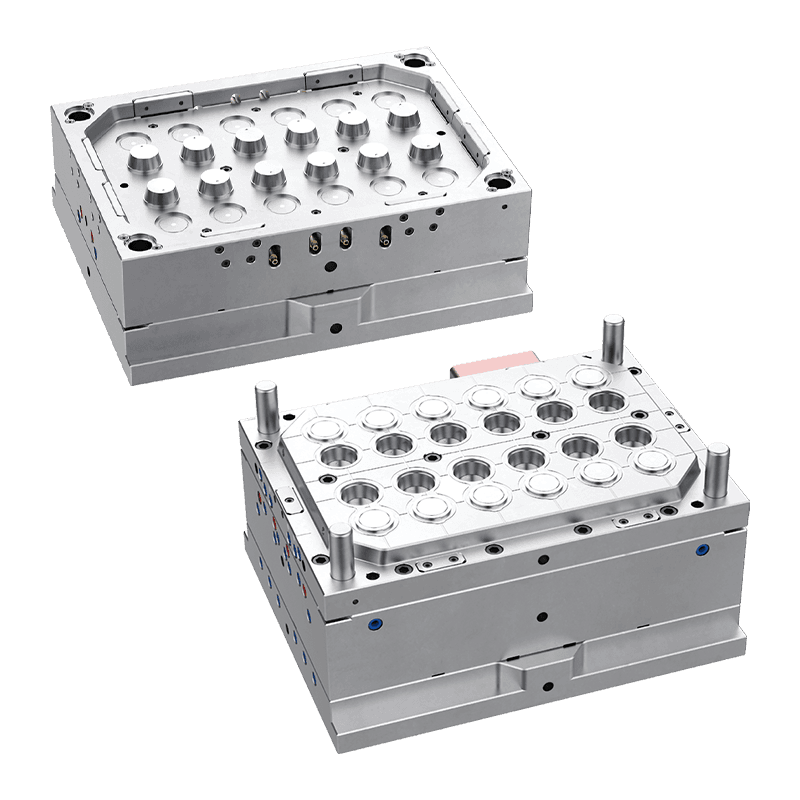
What a Thin Wall Food Container Mould Is and Why It Is Different
The mould is designed for high-speed, high-cavity production
A standard injection mould for a thick-walled part might run on a 30-second cycle. A thin wall food container mould runs on a 5-second cycle. The mould opens faster. The plastic flows faster. The cooling is faster. Everything about the mould is optimized for speed.
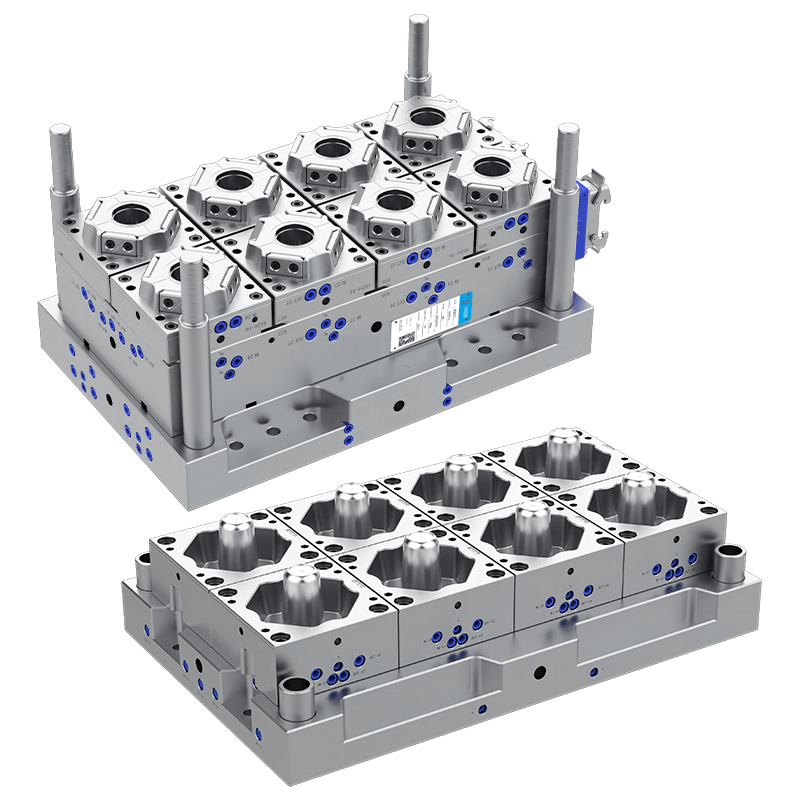
The mould also has more cavities. A standard mould might have 2 or 4 cavities. A thin wall food container mould often has 8, 16, or even 32 cavities. Each cavity makes one container. More cavities means more containers per cycle. More containers per hour. Lower cost per container.
The mould needs special hot runner systems for thin wall filling
Thin walls freeze off quickly. If the plastic cools before the cavity fills, the container is incomplete — a short shot. A thin wall food container mould uses a hot runner system. The hot runner keeps the plastic molten all the way to the gate. No frozen plastic blocking the flow.
The gates are small. Very small. A pin or valve opens the gate at the right moment. Plastic shoots into the cavity at high speed. The cavity fills in a fraction of a second. Then the gate closes. The next cycle starts.
How the Mould Design Affects Container Quality
Wall thickness consistency prevents weak spots and warping
A thin wall food container mould is already working with thin material. Variations in thickness are not acceptable. A spot that is 0.1 millimeter thinner than the rest will crack under load. A spot that is thicker will sink or warp.
The mould designer uses flow simulation software to balance the plastic flow. Each cavity gets the same amount of plastic at the same pressure. The vents are placed where air escapes without causing burns or short shots.
Here is what a well-designed thin wall food container mould produces:
- Walls within 0.05 millimeter of target thickness
- Sharp corners without sink marks
- Flat rims that seal with lids
- Consistent stacking height across all containers
- Cooling is the bottleneck in thin wall moulding
The plastic must cool before the mould opens. In a thin wall food container mould, cooling takes of the cycle time. Faster cooling means faster cycles. More containers per hour. Lower cost.
Good moulds have conformal cooling channels. The channels follow the shape of the container, not just straight lines. Conformal cooling pulls heat out evenly. The container cools from 200 degrees to ejection temperature in seconds.
Why Thin Wall Containers Need Special Mould Features
The container needs enough strength despite thin walls
Ribs and geometric features add strength without adding thickness. A thin wall food container mould includes ribs on the bottom and sides. The ribs stiffen the container. The walls stay thin. The container holds food without flexing.
The rim is reinforced. The rim takes the abuse — lids snapping on and off, stacking, handling. A thin wall food container mould creates a rolled rim or a thickened lip. The container does not collapse when pressed.
Stacking lugs keep containers from jamming
Containers stack. If the stack is too tight, the containers jam. Customers cannot separate them. If the stack is too loose, the stack tips over. A thin wall food container mould creates stacking lugs — small protrusions that control the stack height.
Here is what stacking lugs do on a thin wall food container mould product:
- Maintain consistent gap between stacked containers
- Prevent suction locking from airtight seals
- Allow airflow between containers for drying
- Keep stacks stable during transport
What Goes Wrong with Cheap Thin Wall Moulds
The mould overheats and cycles slow
A thin wall food container mould without enough cooling capacity runs hot. The mould operator waits longer for the plastic to cool. Cycle time goes up. Production goes down. The cost per container goes up.
Inadequate cooling also causes warping. The container comes out of the mould hot and soft. It bends before it cools. The bottom is not flat. The container rocks on a table.
A thin wall food container mould is a high-performance tool. It runs fast. It makes millions of containers. It pays for itself in volume. But the upfront cost is high. The mould needs precision machining, conformal cooling, valve gates, and replaceable inserts. Cheap moulds lack these features. They run slow. They wear out early. The containers have defects. For high-volume food packaging, a quality thin wall mould is worth the investment. The lower cost per container pays back the difference quickly.
Contact Us
Email: [email protected]; Or fill out the contact form below.

Yongkang Huashun Mould Co., Ltd. is a technology-based enterprise specializing in the production of thin-walled injection molds.
PRODUCT
- Disposable Plastic Round Food Container Moulds
- Disposable Plastic Square Food Container Moulds
- Disposable Bubble Tea Plastic PP Cup Mould Series
- Disposable Plastic Knife Fork And Spoon Mould Series
- Disposable Plastic Multi-grid Food Container Mould Series
- Disposable Plastic Portion Cup Mould Series
- Disposable Plastic Cup Mould Series
 Email:
  Phone: +86-18067655796
 Tel: +86-0579-87137609
 Add: No. 218, Shangpu Road, Yongkang Economic Development Zone, Jinhua City, Zhejiang Province, China


