
 English
 中文简体
中文简体 русский
 Español
 Français
Thin Wall Food Container Mould Factory: The Tooling Behind Lightweight Packaging
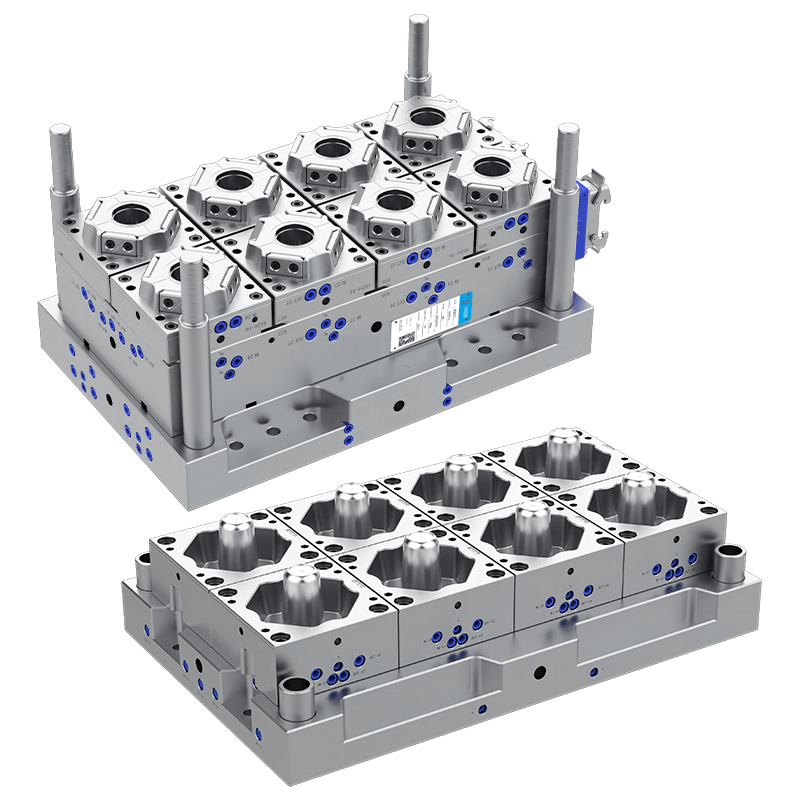
A yogurt cup weighs a few grams. A takeout container's wall is thinner than a credit card. These parts are injection molded in seconds, ejected while still hot, and stacked by the thousands. The mold that makes them is a precision tool that has to fill fast, cool instantly, and release the part without warping it. A thin wall food container mould factory builds these high-speed, multi-cavity molds for packaging converters and food brands. The mold runs around the clock. Every second of cycle time matters. Every fraction of a gram of material matters.
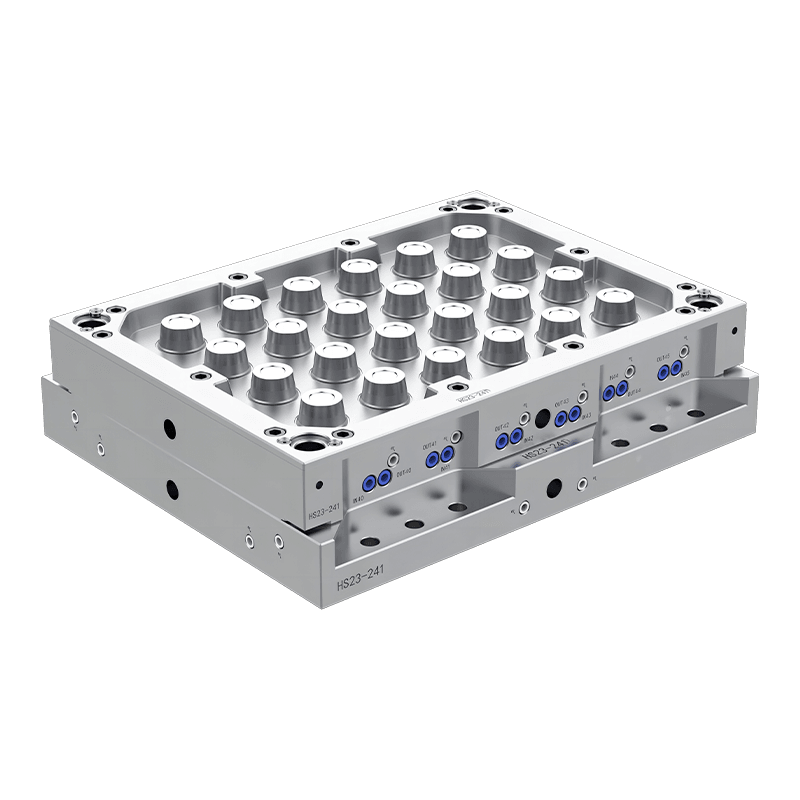
The Fill: Fast and Complete
Thin wall molding is a race. The molten plastic enters the cavity and begins to freeze the instant it touches the mold wall. The cavity has to fill before the flow front solidifies. A thin wall food container mould factory uses high injection speeds and multiple gates to push the melt through the part before it freezes.
The gate design determines the fill pattern. A center gate in the base of a round container pushes the melt outward and upward. Edge gates around the rim fill the walls from the outside in. A thin wall food container mould factory positions the gates so every section of the cavity fills at the same time. A section that fills late short shots.
The hot runner system delivers melt to every cavity at the same pressure and temperature. A thin wall food container mould factory balances the runner so all cavities fill identically. A cavity that runs cold produces a short shot or a warped part.
The Cooling: Fast and Even
Cycle time is everything. The mold that cools the part faster produces more containers per hour. A thin wall food container mould factory drills cooling channels through the cavity and core plates, positioned as close to the cavity surface as possible. Conformal cooling channels follow the contour of the part to pull heat from areas straight drilled lines miss.
The core is the hardest part to cool. It sits inside the container and holds the shape. A thin wall food container mould factory uses bubblers or spiral cooling in the core to pull heat from deep inside. The water circulates through the channels and carries the heat away.
Uniform cooling prevents warpage. If one side of the container cools faster than the other, the part warps toward the slower side. A thin wall food container mould factory balances the cooling on both mold halves so the container comes out flat and round.
The Ejection: Gentle and Fast
Thin wall parts are flexible when hot. They have little structural strength. Ejector pins that push too hard leave marks or punch through. A thin wall food container mould factory uses a stripper ring or stripper plate that pushes on the container rim. Air ejection through the core breaks the vacuum between the part and the steel.
The ejection stroke has to clear the full depth of the container. The mold opens, the stripper advances, and the part releases. A thin wall food container mould factory times the ejection so the container drops cleanly onto the conveyor.
The stacking feature is part of the mold design. Thin wall containers stack. The base of one container fits into the rim of the next. A thin wall food container mould factory machines the stacking lugs and the rim geometry so the containers nest without jamming.
Here is what a thin wall food container mould factory needs to deliver:
- High injection speed capability with balanced hot runner
- Conformal cooling in core and cavity
- Stripper plate or ring ejection with air assist
- Stacking features that nest without jamming
- Multi-cavity layout with identical fill in every cavity
The Materials and the Market
Thin wall containers are made from polypropylene, PET, or polystyrene. PP is flexible and crack-resistant. PET is clear and rigid. PS is cheap and brittle. A thin wall food container mould factory designs the mold for the specific material shrinkage and flow characteristics.
The market for thin wall packaging is growing. Takeout containers, yogurt cups, deli tubs, and meal prep boxes all use thin wall molding. The converters who run these molds demand speed. A thin wall food container mould factory that delivers a mold running a two-second faster cycle time wins the order.
What Fails on a Thin Wall Mold
The container warps because the cooling was uneven. A thin wall food container mould factory with balanced cooling produces flat, round parts. The rim flashes because the clamp tonnage was insufficient. A properly designed mold with adequate support pillars holds the parting line closed. The container sticks in the core because the draft angle was too small. Proper draft and a polished core release the part.
A thin wall food container mould factory builds the tooling that makes the packaging the food industry runs on. The mold fills fast, cools even, and ejects clean. Choose a factory that balances the runner, cools the core, and builds for the cycle time. The containers will stack, seal, and ship. That is the job. That is what the mold is for.
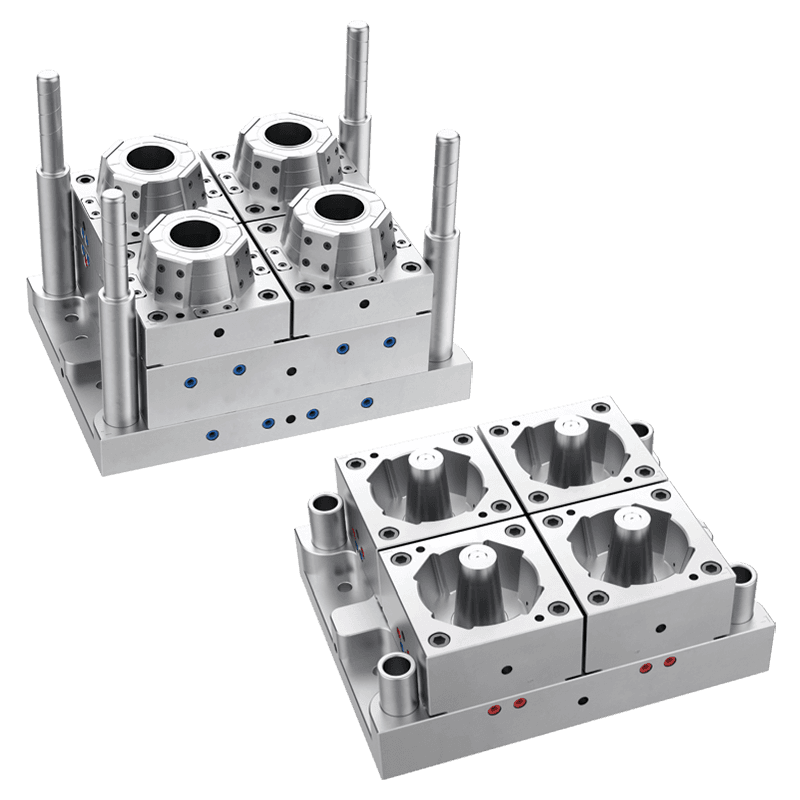
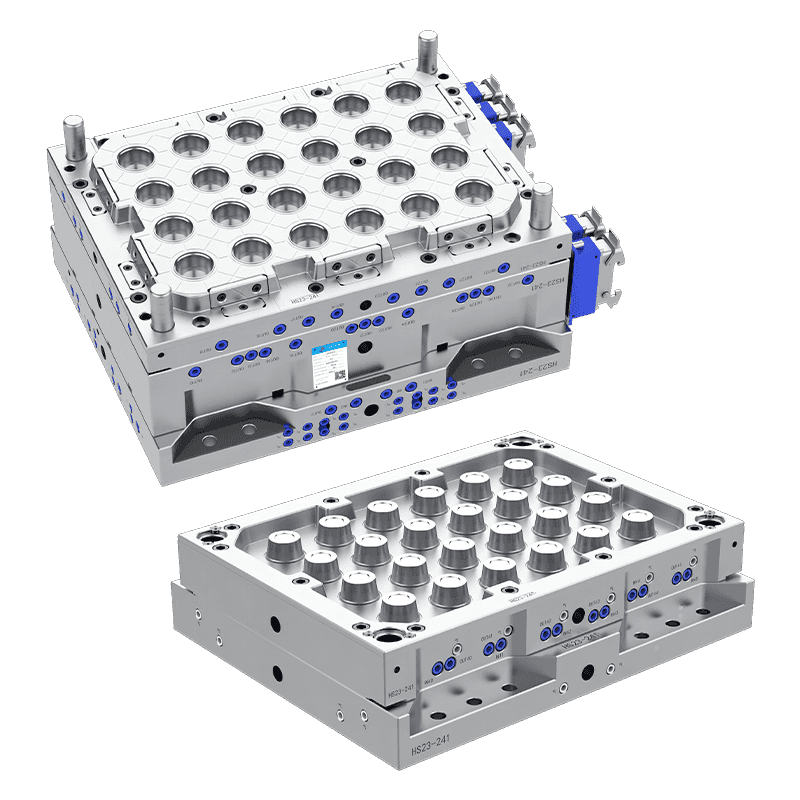
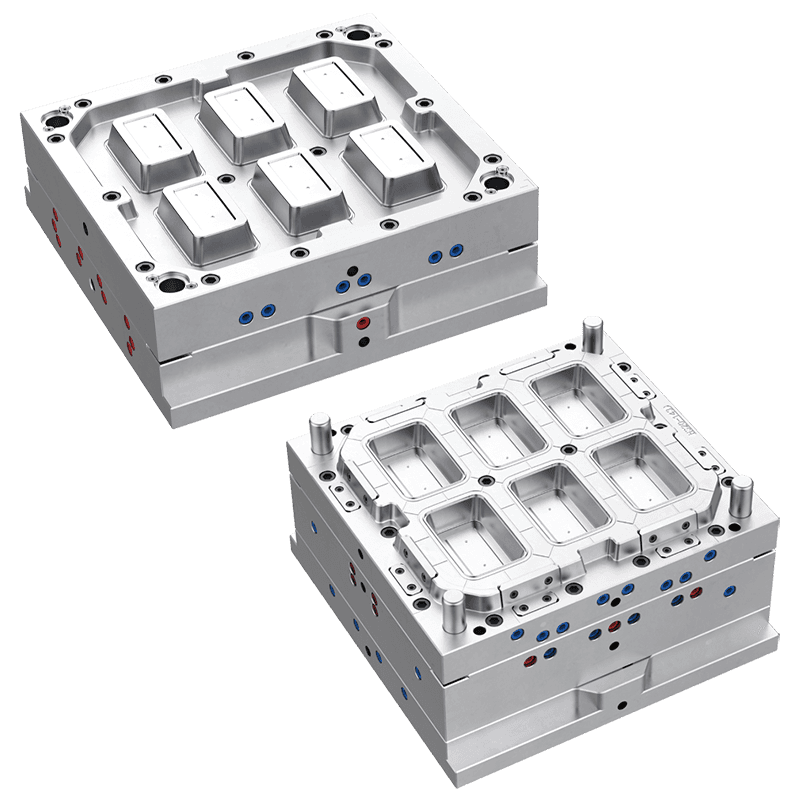
Contact Us
Email: [email protected]; Or fill out the contact form below.

Yongkang Huashun Mould Co., Ltd. is a technology-based enterprise specializing in the production of thin-walled injection molds.
PRODUCT
- Disposable Plastic Round Food Container Moulds
- Disposable Plastic Square Food Container Moulds
- Disposable Bubble Tea Plastic PP Cup Mould Series
- Disposable Plastic Knife Fork And Spoon Mould Series
- Disposable Plastic Multi-grid Food Container Mould Series
- Disposable Plastic Portion Cup Mould Series
- Disposable Plastic Cup Mould Series
 Email:
  Phone: +86-18067655796
 Tel: +86-0579-87137609
 Add: No. 218, Shangpu Road, Yongkang Economic Development Zone, Jinhua City, Zhejiang Province, China


