
 English
 中文简体
中文简体 русский
 Español
 Français
Plastic Round Food Container Mold: The Tooling That Shapes the Tub on the Shelf
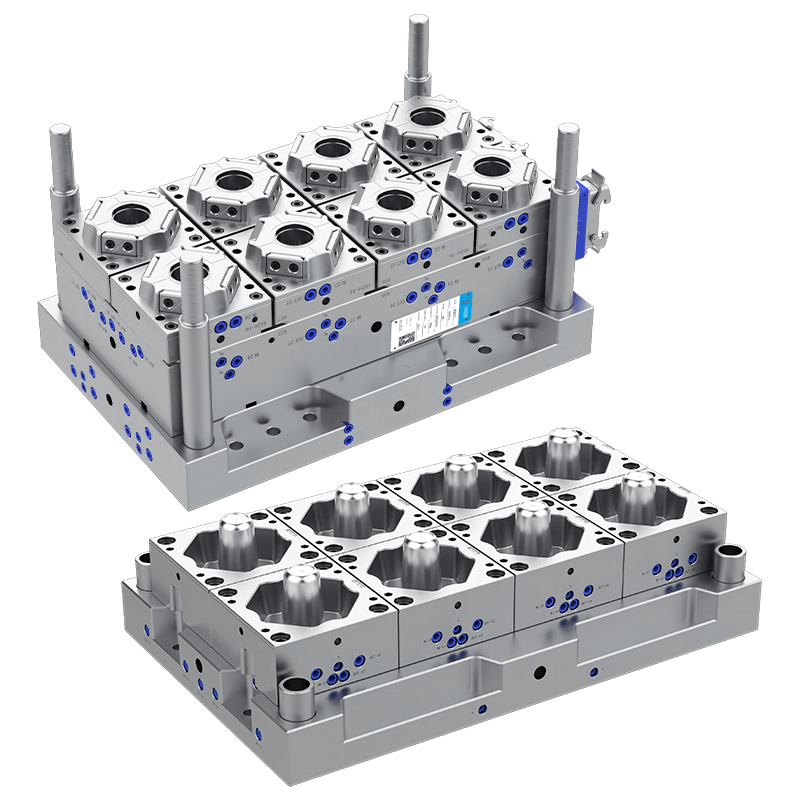
A round plastic tub holds yogurt, soup, dips, and leftovers. It is a simple shape: a round body, a rim, a base. The mold that makes it has to fill the cavity, cool the part, and eject it at a speed that makes the packaging cost work. A plastic round food container mold is built for the volume. Multi-cavity, hot runner, fast cycle. For packaging converters and food brands, the mold is the tooling behind the tub.
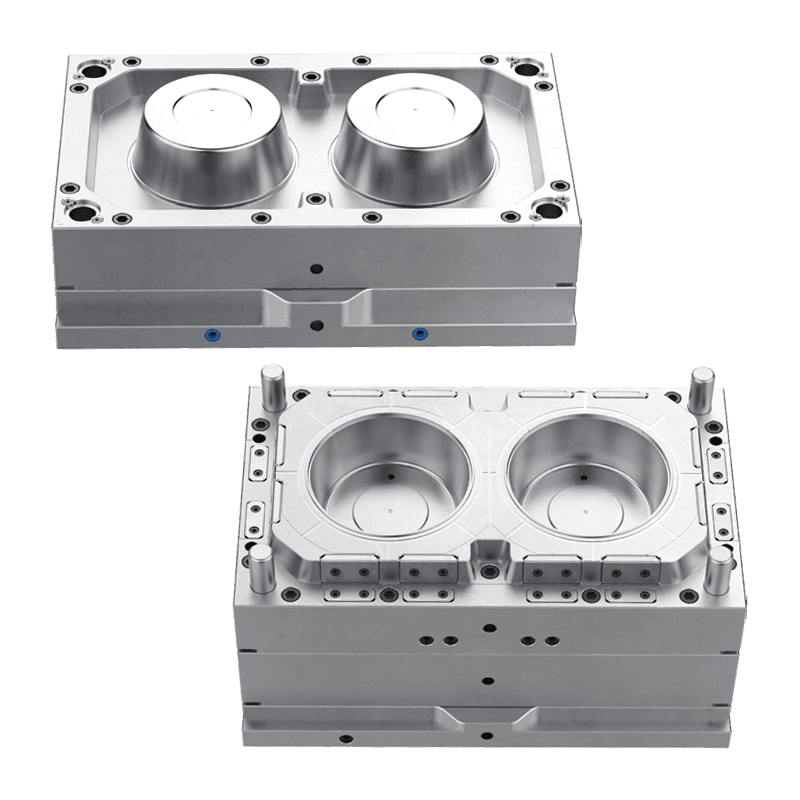
The Round Cavity and the Rim
The cavity is round, with a slight taper from the rim to the base. The taper lets the container release from the core. A plastic round food container mold with the proper taper produces the tub that comes out clean.
The rim is the sealing surface. The lid or the film seals to the rim. The rim has to be flat, smooth, and flash-free. A plastic round food container mold with the properly machined rim produces the tub that seals.
The base has a recess or a stacking feature. The tubs stack for the shipping and the shelf. A plastic round food container mold with the proper base geometry produces the tubs that nest.
The Fill and the Gate
The gate is where the melt enters the cavity. For a round container, the gate is usually in the center of the base. The melt flows outward from the center, filling the base and then the walls. A plastic round food container mold with a center gate fills the cavity evenly.
The hot runner keeps the melt at the right temperature up to the gate. No cold runner to trim. A plastic round food container mold with a hot runner system saves the material and the cycle time.
The gate vestige is the mark left on the tub. A small, smooth vestige is acceptable on the base. A plastic round food container mold with the properly designed gate leaves the vestige that does not affect the function.
The Cooling and the Ejection
The cooling channels run through the core and the cavity. The core is the inside shape, the hardest part to cool. A plastic round food container mold with the properly cooled core hits the cycle time.
The ejection system pushes the tub off the core. A stripper ring or a ring of ejector pins on the rim releases the part. A plastic round food container mold with the proper ejection releases the tub without the deformation.
The surface finish matters. The inside of the tub has to be smooth for the food contact. A plastic round food container mold with the polished cavity produces the smooth tub.
Here is what a plastic round food container mold needs to deliver:
- Round cavity with proper taper
- Flat, smooth rim for sealing
- Base geometry for stacking
- Center gate with hot runner
- Cooling channels in core and cavity
- Stripper or pin ejection without damage
The Yogurt and the Dip
The yogurt producer uses the tub for the single-serve and the family size. The tub seals with the foil. A plastic round food container mold makes the tub that holds the seal.
The dip producer uses the tub for the hummus, the salsa, the guacamole. The tub is clear or colored. A plastic round food container mold with the right material produces the tub that shows the product.
The deli uses the tub for the salads and the soups. The tub stacks in the case. A plastic round food container mold with the proper stacking produces the tubs that display well.
The Rim That Flashes
The rim flashes because the clamp force was not enough or the parting line was worn. A properly maintained mold with the right clamp holds the rim flat. The tub sticks because the draft was too small. A proper taper releases the tub. The tub warps because the cooling was uneven. Balanced cooling fixes it.
A plastic round food container mold is the tooling that makes the tub. The cavity fills. The rim seals. The tub stacks. Choose a mold with the right taper, the flat rim, and the proper cooling. The tubs will come out fast and clean. That is the point. That is what the mold is for.
Contact Us
Email: [email protected]; Or fill out the contact form below.

Yongkang Huashun Mould Co., Ltd. is a technology-based enterprise specializing in the production of thin-walled injection molds.
PRODUCT
- Disposable Plastic Round Food Container Moulds
- Disposable Plastic Square Food Container Moulds
- Disposable Bubble Tea Plastic PP Cup Mould Series
- Disposable Plastic Knife Fork And Spoon Mould Series
- Disposable Plastic Multi-grid Food Container Mould Series
- Disposable Plastic Portion Cup Mould Series
- Disposable Plastic Cup Mould Series
 Email:
  Phone: +86-18067655796
 Tel: +86-0579-87137609
 Add: No. 218, Shangpu Road, Yongkang Economic Development Zone, Jinhua City, Zhejiang Province, China


