
 English
 中文简体
中文简体 русский
 Español
 Français
Plastic Fork Mold Factory: The Tooling Behind the Disposable Fork
A plastic fork costs a fraction of a cent to make. It is used once and thrown away. But the mold that produces it is a precision tool that has to fill dozens of cavities simultaneously, cool the parts in seconds, and eject them without bending a single tine. A plastic fork mold factory builds these multi-cavity molds for cutlery manufacturers who run them around the clock. The fork has to be rigid enough to spear food, smooth enough not to cut the mouth, and cheap enough to throw away. The mold makes all three possible.
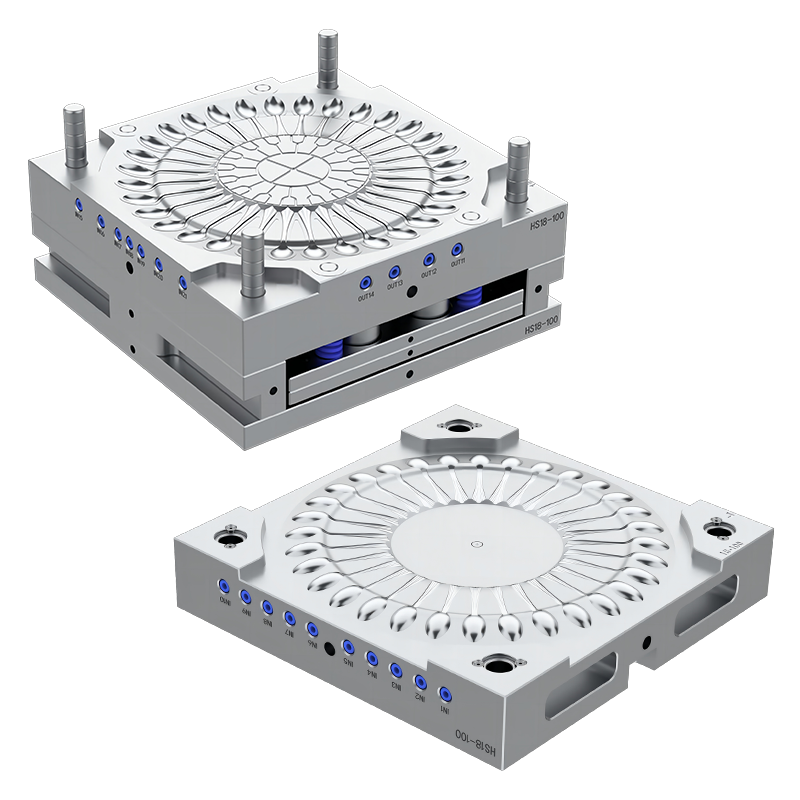
The Cavity That Shapes the Fork
A plastic fork is a thin part with a complex geometry. The handle tapers. The tines are thin and separated. The mold cavity has to form every detail without short shots, weld lines, or flash. A plastic fork mold factory cuts the cavity into tool steel using CNC machining and EDM. The parting line runs along the edge of the fork where it is least visible.
The gate is where the molten plastic enters the cavity. For a fork, the gate is usually at the end of the handle or in the center of the back. A plastic fork mold factory positions the gate so the melt flows down the handle and splits into the tines evenly. An unbalanced flow leaves one tine short or weak.
The material is usually polypropylene or polystyrene. PP is flexible and resists cracking. PS is stiffer and cheaper. A plastic fork mold factory designs the mold for the specific material shrinkage. The cavity dimensions are larger than the finished part by the shrinkage factor.
Multi-Cavity Production and Cycle Time
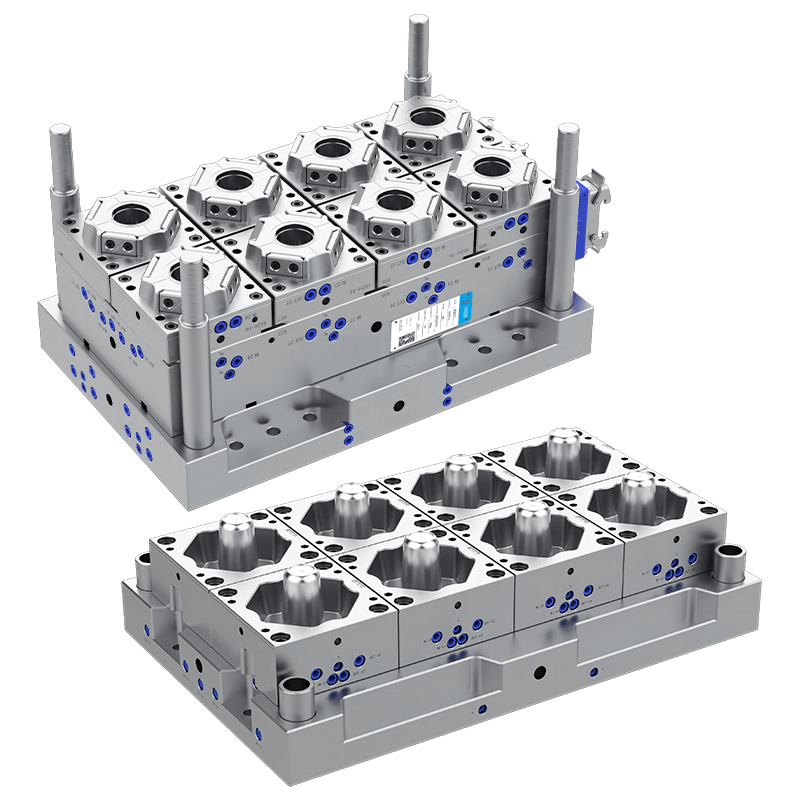
A single fork per cycle is not economical. A production mold has 16, 32, 48, or more cavities, all fed by a hot runner system that delivers melt to every cavity at the same pressure and temperature. A plastic fork mold factory balances the runner system so every cavity fills identically. A cavity that fills late produces a short shot.
Cycle time is everything in disposable cutlery. The mold has to cool the parts fast enough to hit the production rate. A plastic fork mold factory drills cooling channels through the cavity plates and the cores. The channels run close to the cavity surface to pull heat out quickly. Uniform cooling prevents warpage.
The ejection system pushes the finished forks out of the cavities. Ejector pins on the handle and the tine roots push the part off the core. A plastic fork mold factory positions the pins so they do not leave visible marks or bend the thin tines. The forks drop onto a conveyor and move to packaging.
Stackability and Nesting
Disposable forks stack. The consumer pulls one fork from the top of the stack. The mold has to produce forks that nest without jamming. A plastic fork mold factory designs the fork geometry with slight draft angles so one fork slides into the next without locking.
The stacking feature is in the handle and the tine spacing. A plastic fork mold factory machines these details so the forks separate cleanly. A fork that jams in the stack is a customer complaint.
The surface finish matters. The fork touches the mouth. A smooth surface feels better. A plastic fork mold factory polishes the cavity to a high finish so the molded fork has no rough edges or burrs.
Here is what a plastic fork mold factory needs to deliver:
- Multi-cavity layout with balanced hot runner delivery
- Gate position that fills handle and tines evenly
- Cavity dimensions compensated for material shrinkage
- Cooling channels for fast cycle times
- Ejector pins positioned without part damage
- Polished cavity surface for a smooth fork
Where the Forks Go
Fast food restaurants, cafeterias, airline meal services, and takeout containers all use disposable plastic forks. The cutlery manufacturer runs the mold continuously. A plastic fork mold factory that builds a mold for a million cycles produces the tool that keeps the line running.
The shift toward sustainable materials is affecting the market. Some manufacturers are switching to PLA, a biodegradable polymer. A plastic fork mold factory designs molds that handle the different shrinkage and flow characteristics of PLA. The fork geometry stays the same. The mold dimensions adjust.
What Fails on a Fork Mold
The tines short shot because the melt froze before reaching the tips. A plastic fork mold factory sizes the gate and runner so the tines fill completely. The fork warps after ejection because the cooling was uneven. Balanced cooling prevents this. The forks stick in the cavities because the draft angle was too small or the surface finish too rough. Proper draft and polishing solve it.
A plastic fork mold factory builds a tool that makes a product nobody thinks about. The fork is cheap, disposable, and everywhere. But it has to be strong enough to spear a piece of chicken, smooth enough not to scratch the mouth, and cheap enough to throw away. The mold makes that possible. The factory that builds the mold right keeps the forks flowing. That is the job.
Contact Us
Email: [email protected]; Or fill out the contact form below.

Yongkang Huashun Mould Co., Ltd. is a technology-based enterprise specializing in the production of thin-walled injection molds.
PRODUCT
- Disposable Plastic Round Food Container Moulds
- Disposable Plastic Square Food Container Moulds
- Disposable Bubble Tea Plastic PP Cup Mould Series
- Disposable Plastic Knife Fork And Spoon Mould Series
- Disposable Plastic Multi-grid Food Container Mould Series
- Disposable Plastic Portion Cup Mould Series
- Disposable Plastic Cup Mould Series
 Email:
  Phone: +86-18067655796
 Tel: +86-0579-87137609
 Add: No. 218, Shangpu Road, Yongkang Economic Development Zone, Jinhua City, Zhejiang Province, China


