
 English
 中文简体
中文简体 русский
 Español
 Français
Plastic Round Food Container Mold: The Tooling That Shapes the Container on Every Shelf
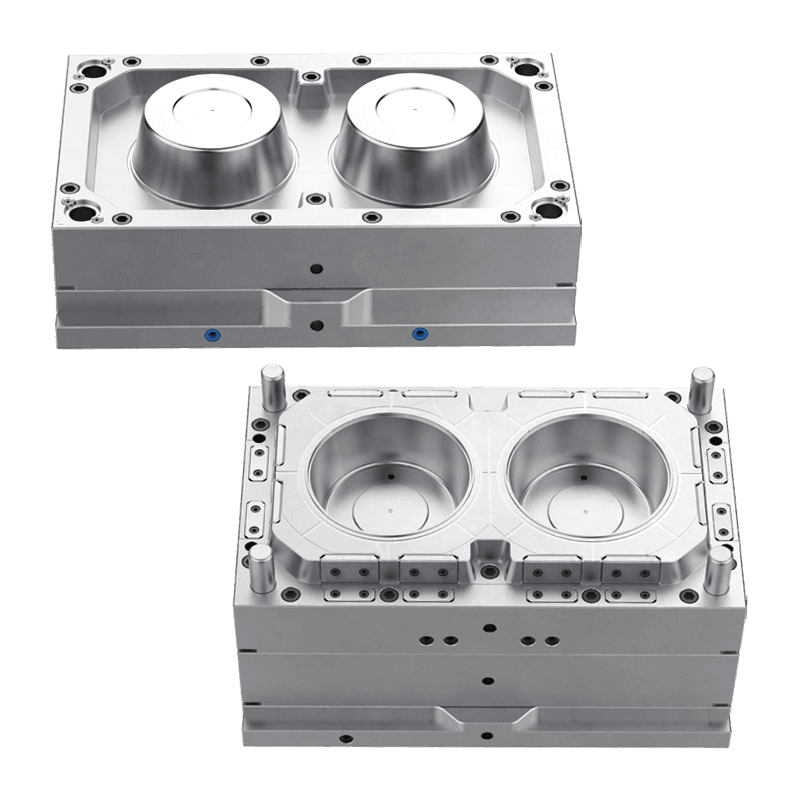
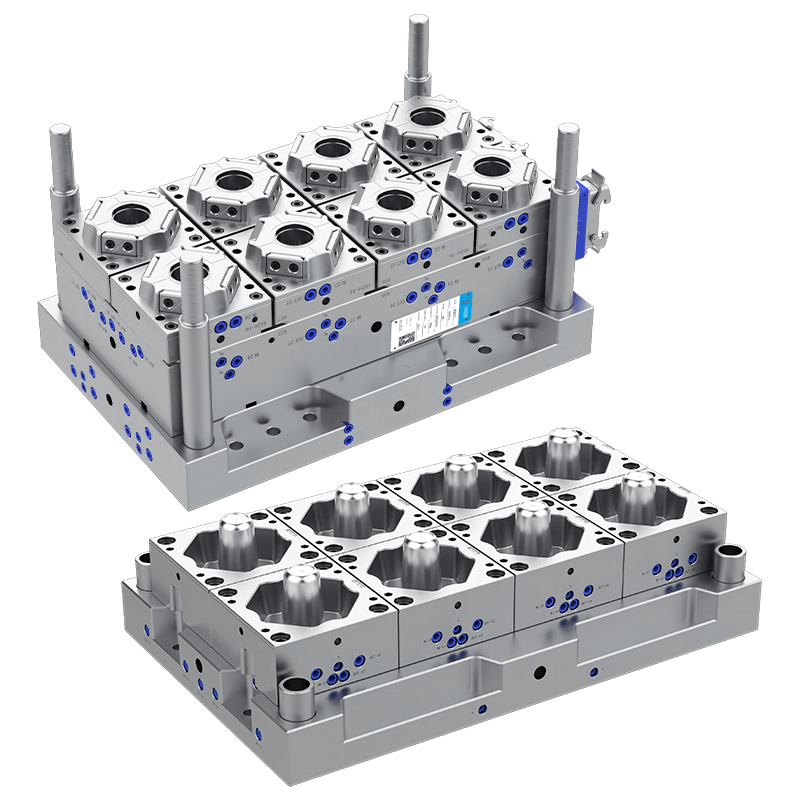
A pint of soup. A tub of yogurt. A clear plastic container of mixed fruit. These are round, stackable, and sealed with a snap-on lid or a foil membrane. A plastic round food container mold produces these parts by injecting molten polypropylene or PET into a circular cavity, cooling it, and ejecting a finished container every few seconds. The round shape presents different challenges than a rectangular container. The gate location, the cooling layout, and the ejection have to work with radial symmetry. For packaging converters, food processors, and private label brands, the mold is the starting point of a product line.
Round Means Symmetrical, But Not Simple
A round container looks simple. The mold design is not. The melt enters the cavity and flows outward from the gate. If the gate is in the center, the flow is radial. If the gate is on the rim, the flow is circumferential. A plastic round food container mold with a center gate produces a container with a small witness mark on the bottom center. A hot runner with a valve gate makes that mark nearly invisible.
The parting line runs around the top rim of the container. The rim is where the lid snaps on or the foil seals. That surface has to be flat, smooth, and free of flash. A plastic round food container mold with a precision-ground parting line produces rims that seal consistently. A container that leaks because the rim was flashed is a product failure, not a cosmetic one.
Wall thickness uniformity is critical in a round part. The melt travels different distances from the gate to the side wall and to the base corner. A plastic round food container mold with properly balanced flow paths fills the cavity without hesitation, preventing weld lines and short shots in the base-to-wall transition.
Cooling a Radial Part Fast
Round containers have a natural advantage in cooling. The geometry is symmetric, so heat extraction is more uniform than in a rectangular part. A plastic round food container mold uses a circular cooling layout that follows the cavity contour. Cooling channels are bored into the core and cavity in concentric rings or spirals, pulling heat evenly from the center outward.
The core is the internal shape of the container. The cavity is the external shape. Both need cooling. A plastic round food container mold with a properly designed bubbler or fountain cooling system in the core pulls heat from deep inside the part. Conformal cooling channels that follow the bowl shape of the container further reduce cycle time.
Uniform cooling prevents warpage. A round container that cools faster on one side warps into an oval. A plastic round food container mold with balanced cooling on both the core and cavity sides produces containers that stay round through the full production run.
Ejection and Demolding
Round containers shrink onto the core as they cool. The side wall grips the core. Draft angles on the walls let the part release. A plastic round food container mold with adequate draft, typically one to two degrees on the core side, releases without the ejector system distorting the container.
A stripper ring or a stripper plate pushes on the container rim to release the part from the core. Ejector pins on the base provide additional force. A plastic round food container mold positions ejector pins on the bottom surface, away from the seal area, so the marks are hidden under the container in use.
For thin-wall, high-speed applications, air ejection assists the mechanical system. A blast of compressed air through the core breaks the vacuum between the container and the steel. A plastic round food container mold with combined mechanical and air ejection cycles faster and handles thinner walls without damage.
Single Cavity to High Cavitation
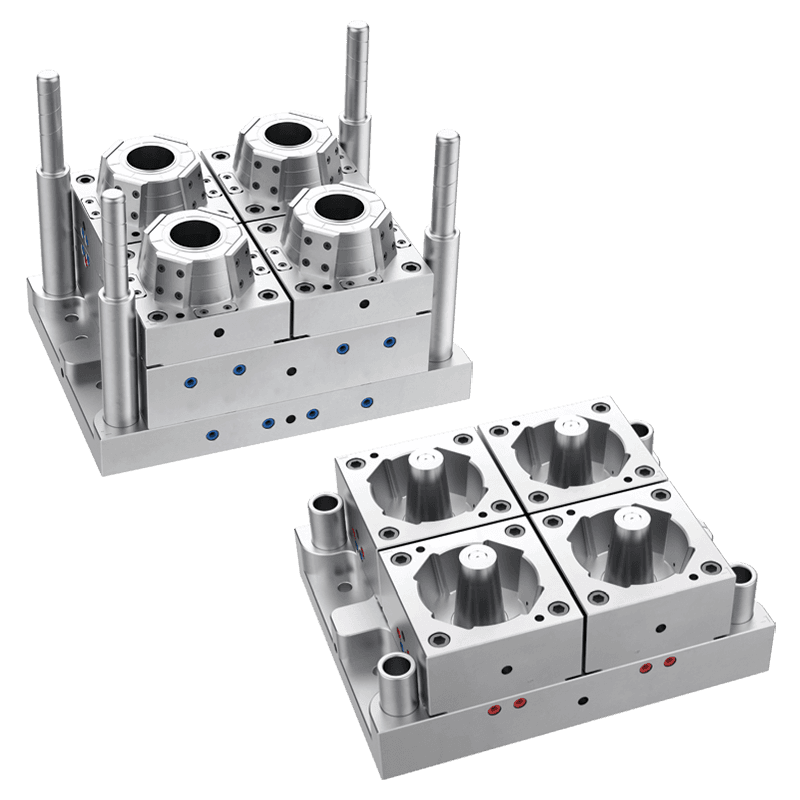
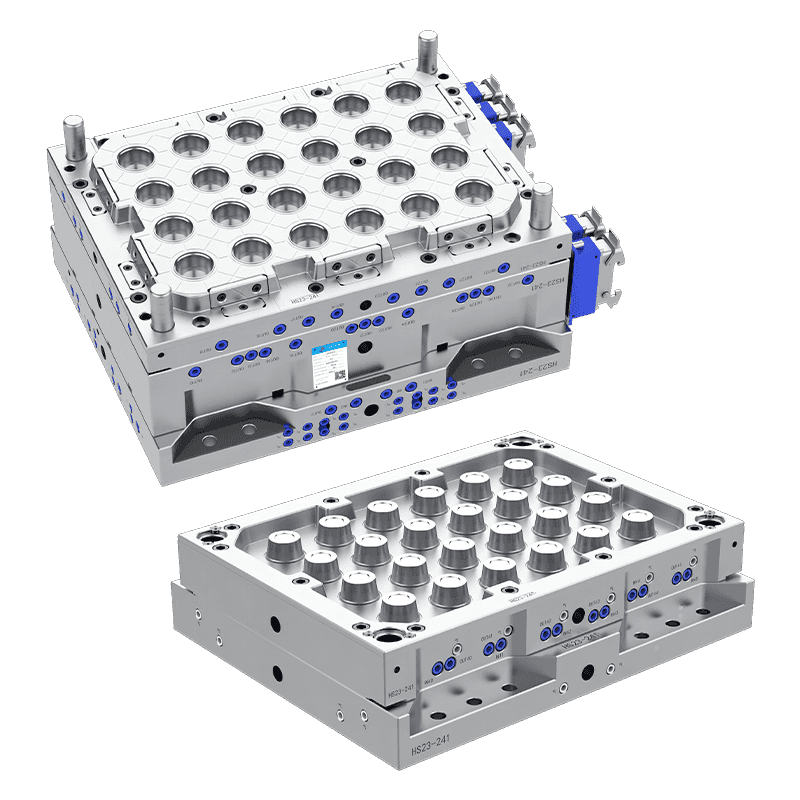
A single-cavity mold is for low-volume production and sampling. A multi-cavity mold with 16, 32, or 48 cavities is for production. A plastic round food container mold built for high cavitation has to balance the melt flow to every cavity simultaneously. The hot runner system is designed so the pressure drop and fill time are identical for each cavity.
Cavity spacing determines the mold size and the press tonnage required. A plastic round food container mold manufacturer optimizes the cavity layout to fit the customer's injection machine while big the number of containers per cycle.
Here is what a round food container mold needs to deliver:
- Center or rim gate with hot runner and small gate vestige
- Precision-ground parting line for flat, flash-free sealing rims
- Concentric or spiral cooling channels for even heat extraction
- Stripper plate or ring ejection with air assist for thin-wall parts
- Multi-cavity layout with balanced melt flow to all cavities
Lidding and Seal Compatibility
The container rim is the interface with the lid. A snap-on lid needs a rim profile with an undercut that the lid snaps over. A foil seal needs a flat, wide rim surface for heat sealing. A plastic round food container mold is designed for the specific lid type and seal method. The rim geometry is machined into the cavity and cannot be changed without cutting new tooling.
What Fails on a Round Mold
The container goes oval because cooling was uneven. A plastic round food container mold with balanced cooling produces round parts. The rim flashes because the parting line was not ground flat or the press tonnage was insufficient. Proper parting line maintenance and correct press sizing prevent flash. The gate vestige is raised and sharp, catching on the user's finger. A valve gate or a properly designed thermal gate leaves a smooth, recessed vestige.
A plastic round food container mold produces the tubs and cups that fill supermarket shelves. The mold fills, cools, and ejects in seconds. Choose a manufacturer that balances the flow for the cavity count, cools the part evenly, and machines the rim for a reliable seal. The containers will stack, the lids will snap, and the food inside will stay fresh. That is what the mold is for.
Contact Us
Email: [email protected]; Or fill out the contact form below.

Yongkang Huashun Mould Co., Ltd. is a technology-based enterprise specializing in the production of thin-walled injection molds.
PRODUCT
- Disposable Plastic Round Food Container Moulds
- Disposable Plastic Square Food Container Moulds
- Disposable Bubble Tea Plastic PP Cup Mould Series
- Disposable Plastic Knife Fork And Spoon Mould Series
- Disposable Plastic Multi-grid Food Container Mould Series
- Disposable Plastic Portion Cup Mould Series
- Disposable Plastic Cup Mould Series
 Email:
  Phone: +86-18067655796
 Tel: +86-0579-87137609
 Add: No. 218, Shangpu Road, Yongkang Economic Development Zone, Jinhua City, Zhejiang Province, China


