
 English
 中文简体
中文简体 русский
 Español
 Français
Plastic Food Container Mould Factory: The Tooling Behind Every Takeout Box and Storage Container
A clear deli container, a meal prep box with locking lids, a yogurt cup sealed with foil. These are not handmade. They are injection molded in cavities cut from hardened steel. A plastic food container mould factory produces the tooling that shapes molten polypropylene or PET into lightweight, stackable, food-safe packaging. The mould has to fill fast, cool evenly, and eject the part without warping it. For packaging converters and food brands, the mould is the starting point of a supply chain that ends on a supermarket shelf.
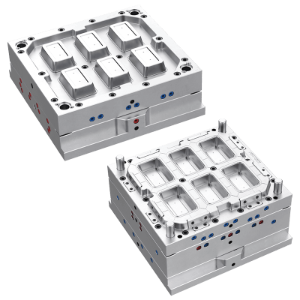
The Cavity That Shapes the Container
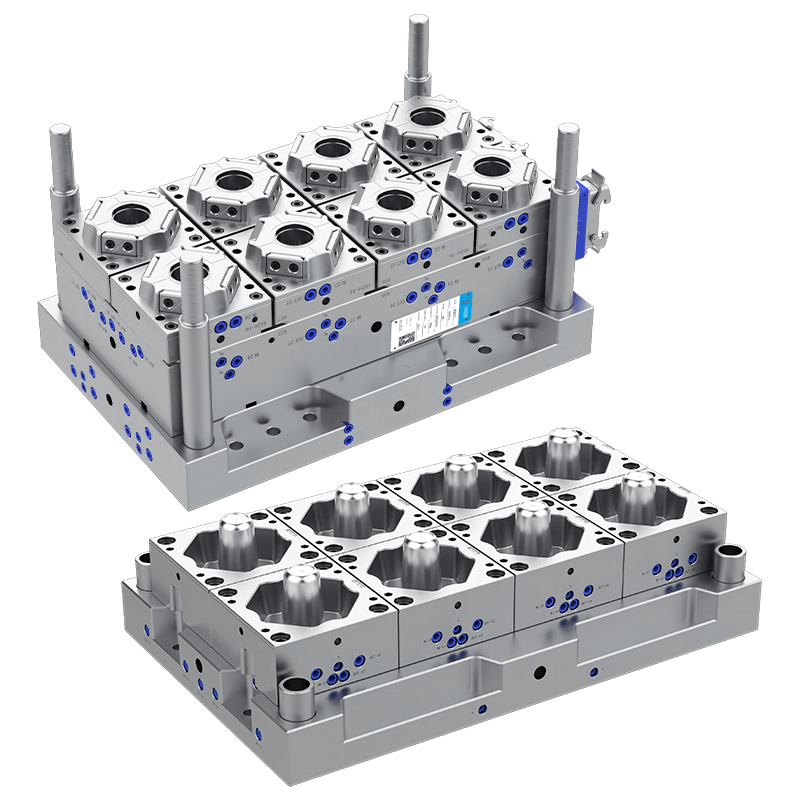
The cavity is the negative of the finished part. Every rib, every stacking lug, every sealing surface is machined into tool steel. A plastic food container mould factory cuts cavities from pre-hardened P20 or hardened H13 steel, depending on the expected production volume. A high-cavitation mould with 16, 32, or 48 cavities produces multiple containers per cycle.
The parting line is where the two mould halves meet. Its location determines where the witness line falls on the container. A plastic food container mould factory positions the parting line on a non-sealing edge so the container rim is smooth and leak-free. The parting surfaces are ground flat to prevent flash, where plastic squeezes into the gap and leaves a thin fin.
Wall thickness has to be uniform. Thin walls use less material and cool faster, but they need adequate flow paths from the gate. A plastic food container mould factory designs the cavity with consistent wall thickness and proper radii so the melt fills without hesitation.
Gate Design and Cycle Time
The gate is where molten plastic enters the cavity. A hot runner system keeps the plastic molten right up to the gate, eliminating the waste of a cold runner. A plastic food container mould factory uses valve gates for large containers that need a fast fill, and thermal gates for smaller parts where gate vestige is less critical.
Cycle time is everything in packaging. The mould that cools faster produces more containers per shift. Cooling channels are drilled through the core and cavity plates, positioned to target the thickest sections. A plastic food container mould factory uses conformal cooling, channels that follow the cavity contour, to pull heat from areas that straight drilled lines miss.
The ejection system pushes the solidified container off the core. Ejector pins, stripper plates, or air ejection have to release the part without distortion. A plastic food container mould factory positions ejector pins on ribs and non-visible surfaces so pin marks do not appear on the container interior.
Mould Materials and Food Safety
Tool steel for food packaging moulds has to resist corrosion from the humid, sometimes acidic environment of high-volume molding. A plastic food container mould factory uses stainless tool steel for cavity and core inserts when molding PET or acidic food-grade materials.
The mould surface finish matters for food safety. A polished cavity surface, typically SPI A2 or better, produces a container interior that is smooth and cleanable. Bacteria cannot hide in surface imperfections. A plastic food container mould factory polishes the cavities to the specified finish and verifies with surface roughness measurement.
Lubrication and mould maintenance chemicals have to be food-safe. A plastic food container mould factory uses food-grade greases and protective sprays on all components that could contact the plastic.
Here is what a food container mould needs to produce:
- Multi-cavity configuration with hot runner and valve gate systems
- Cavities machined from stainless or hardened tool steel
- Conformal cooling for reduced cycle time
- Ejector pins positioned on non-visible surfaces
- Polished cavity surfaces for food-safe cleanability
IML Integration for Labeled Containers
In-mold labeling places a pre-printed PP label into the cavity before injection. The label fuses to the container wall. A plastic food container mould factory builds IML-compatible moulds with vacuum channels or electrostatic label retention to hold the label in place during fill. The label becomes part of the container, not a sticker that peels in the microwave.
What Fails When the Mould Runs Hot
The cooling channels scale up from hard water and heat transfer drops. Cycle time increases. A plastic food container mould factory designs cooling circuits with accessible connections for routine cleaning. The ejector pins wear and gall in their bores, leaving drag marks on the container interior. Hardened pins with proper lubrication and replacement schedules prevent this.
The parting line flashes because the mould was not fully closed or the clamp tonnage was insufficient. A plastic food container mould factory builds the mould with adequate support pillars and specifies the required clamp force.
A plastic food container mould factory builds the tooling that makes packaging possible. The mould fills with molten plastic, cools it into shape, and ejects a finished container every few seconds. Choose a manufacturer that designs the cavity for the material, cools it efficiently, and builds it to run millions of cycles without flashing or jamming. The containers will stack, seal, and feed the packaging line without interruption. That is the point.
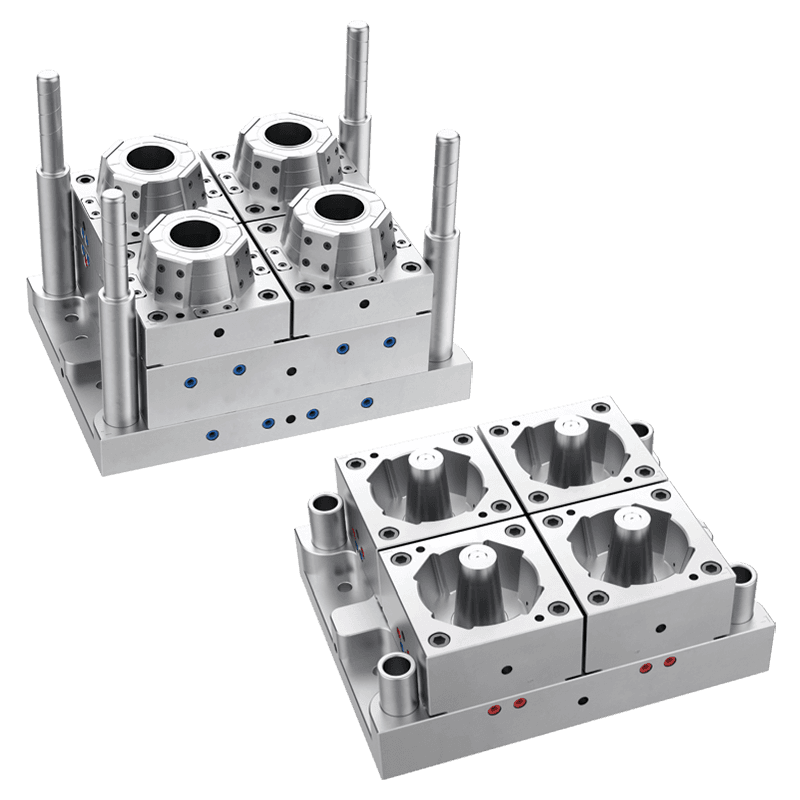
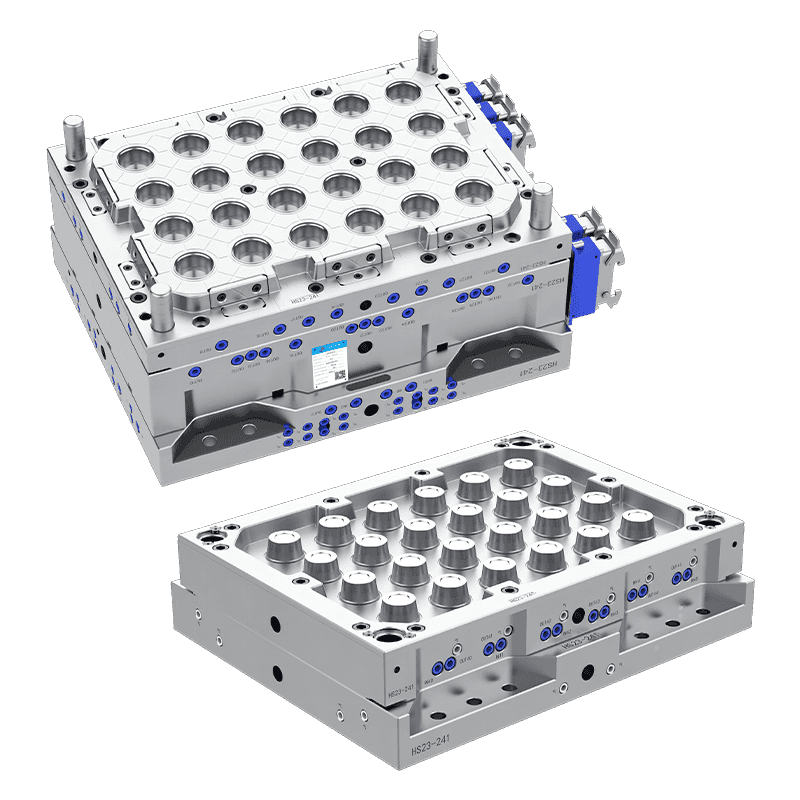
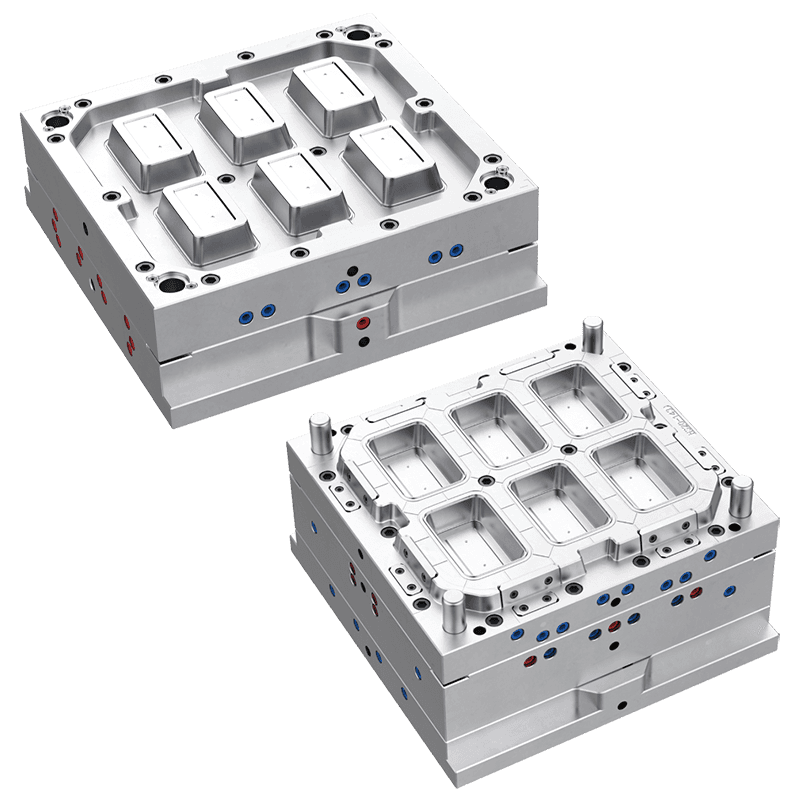
Contact Us
Email: [email protected]; Or fill out the contact form below.

Yongkang Huashun Mould Co., Ltd. is a technology-based enterprise specializing in the production of thin-walled injection molds.
PRODUCT
- Disposable Plastic Round Food Container Moulds
- Disposable Plastic Square Food Container Moulds
- Disposable Bubble Tea Plastic PP Cup Mould Series
- Disposable Plastic Knife Fork And Spoon Mould Series
- Disposable Plastic Multi-grid Food Container Mould Series
- Disposable Plastic Portion Cup Mould Series
- Disposable Plastic Cup Mould Series
 Email:
  Phone: +86-18067655796
 Tel: +86-0579-87137609
 Add: No. 218, Shangpu Road, Yongkang Economic Development Zone, Jinhua City, Zhejiang Province, China


