
 English
 中文简体
中文简体 русский
 Español
 Français
Plastic Rectangular Food Container Mold: The Tooling Behind Meal Prep and Takeout
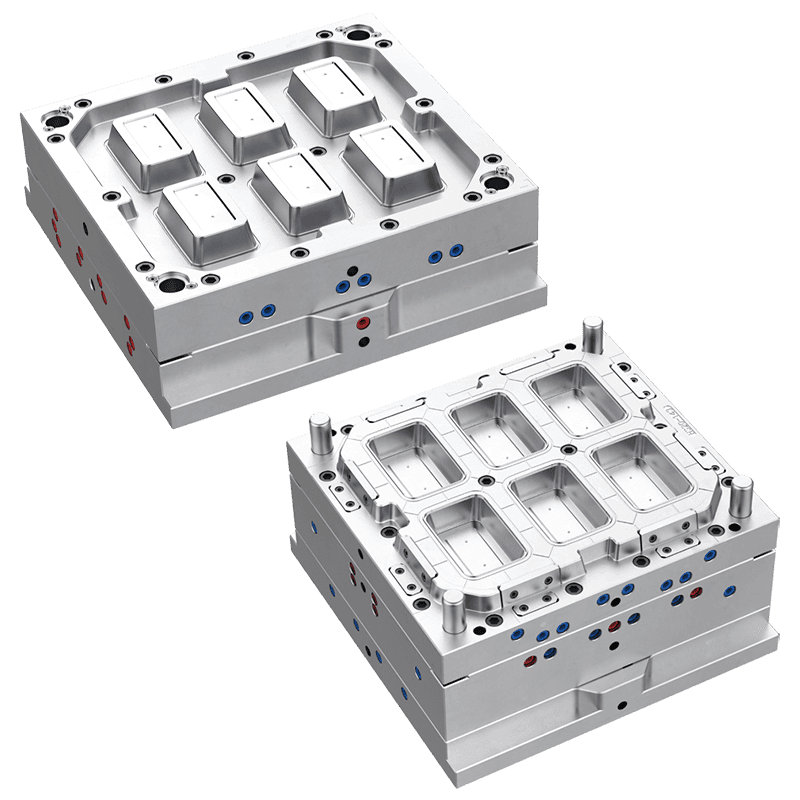
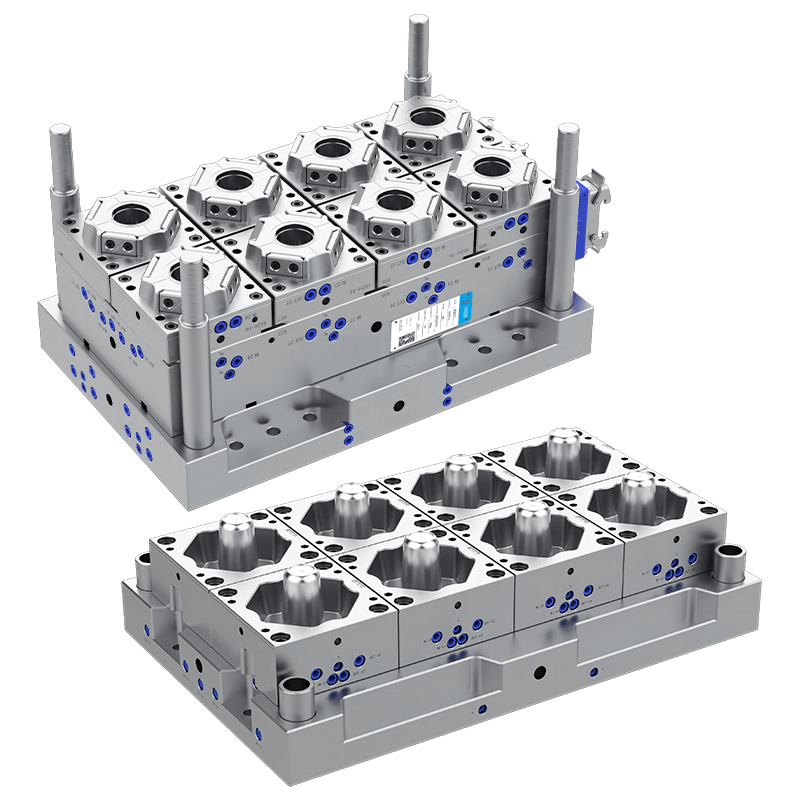
A meal prep box with three compartments. A takeout container with a snap-on lid. A rectangular tub of spreads or sauces. These are not round. The corners, the flat walls, and the divided sections each present a challenge to fill, cool, and eject. A plastic rectangular food container mold produces these parts by injecting molten PP or PET into a cavity with straight sides and sharp transitions. The flow has to reach every corner. The cooling has to pull heat from flat panels without warping them. For packaging converters and food brands, the rectangular mold is the tool that turns resin into a container that stacks on a shelf and seals in a fridge.
Corners, Flat Walls, and Flow
A rectangular cavity is harder to fill than a round one. The melt enters through a gate and flows outward. When it hits a corner, the flow hesitates. A plastic rectangular food container mold with a gate positioned to less the flow distance to the farthest corner fills without short shots. A hot runner with a valve gate in the center of each cavity delivers melt evenly.
The flat walls need consistent thickness. Thin walls use less material and cycle faster. Too thin and the container buckles when the lid snaps on. A plastic rectangular food container mold with wall thickness designed for the container volume and lid type produces parts that are rigid enough to hold food without flexing.
Divided compartments add complexity. A three-compartment meal prep box has internal walls that form the dividers. These walls are thin steel inserts in the mold. The melt has to flow around them and knit together on the other side. A plastic rectangular food container mold with venting at the knit line lets trapped air escape so the seam is strong and the divider is fully formed.
Cooling Flat Panels Without Warping
A flat panel warps when one side cools faster than the other. The base of a rectangular container is a large flat surface. A plastic rectangular food container mold with cooling channels on both the core and cavity sides pulls heat evenly. The temperature difference between the two mold halves has to stay within a narrow range.
The corners hold heat longer than the flat sections. A plastic rectangular food container mold with additional cooling in the corner areas, either through conformal channels or high-conductivity inserts, removes that heat and prevents the corners from staying soft during ejection.
The core, the inside shape of the container, is harder to cool than the cavity. A plastic rectangular food container mold with baffles, bubblers, or spiral cooling inside the core pulls heat from deep inside the part. Conformal cooling channels that follow the rectangular contour reduce cycle time and improve part quality.
Ejection Across a Flat Base
A rectangular container shrinks onto the core. The flat base and straight walls resist release more than a tapered round shape. A plastic rectangular food container mold with adequate draft on the walls, typically one to two degrees, and a stripper plate that pushes on the rim releases the part without sticking.
Ejector pins push on the base. A plastic rectangular food container mold positions the pins in the corners and along the edges where the marks are hidden under the container in use. Pins in the center of a flat base can leave visible marks and create stress points.
For thin-wall containers, air ejection through the core helps break the vacuum. A plastic rectangular food container mold with air poppet valves in the base releases the container without mechanical force that could warp the hot plastic.
Here is what a rectangular food container mold needs to produce:
- Gate positioned for even fill to the farthest corner
- Uniform wall thickness for rigidity without material waste
- Cooling channels on both mold halves with corner-focused heat removal
- Stripper plate and ejector pins positioned on non-visible surfaces
- Venting at divider knit lines for fully formed internal walls
Sealing and Lid Fit
A rectangular container seals differently than a round one. The corners are stress points where the lid or foil must adhere. A plastic rectangular food container mold with a flat, wide rim around the full perimeter, including through the corners, provides the sealing surface. The rim has to be free of flash and sink marks.
Snap-on lids need an undercut on the rim. Foil seals need a flat surface for heat sealing. A plastic rectangular food container mold is designed for the specific closure type. The rim geometry is machined into the cavity and cannot be changed later.
What Warps, Flashes, or Sticks
The base warps upward because it cooled faster on the cavity side. Balanced cooling on both mold halves prevents this. The corners flash because the parting line was not clamped with enough force. A plastic rectangular food container mold with adequate support pillars and the correct press tonnage holds the parting line closed.
The divider walls stick in the mold and tear during ejection. Proper draft on the dividers and a smooth surface finish prevent sticking. A plastic rectangular food container mold with polished divider inserts releases cleanly.
A plastic rectangular food container mold produces the boxes and tubs that fill meal prep stations and takeout counters. The melt fills the corners. The cooling keeps the walls flat. Choose a manufacturer that designs the flow for the cavity shape, cools the part evenly, and builds the mold to run millions of cycles. The containers will stack, the lids will seal, and the food inside will stay fresh. That is the point.
Contact Us
Email: [email protected]; Or fill out the contact form below.

Yongkang Huashun Mould Co., Ltd. is a technology-based enterprise specializing in the production of thin-walled injection molds.
PRODUCT
- Disposable Plastic Round Food Container Moulds
- Disposable Plastic Square Food Container Moulds
- Disposable Bubble Tea Plastic PP Cup Mould Series
- Disposable Plastic Knife Fork And Spoon Mould Series
- Disposable Plastic Multi-grid Food Container Mould Series
- Disposable Plastic Portion Cup Mould Series
- Disposable Plastic Cup Mould Series
 Email:
  Phone: +86-18067655796
 Tel: +86-0579-87137609
 Add: No. 218, Shangpu Road, Yongkang Economic Development Zone, Jinhua City, Zhejiang Province, China


