
 English
 中文简体
中文简体 русский
 Español
 Français
Mould For Plastic Cup: High-Speed Tooling for Disposable Cups
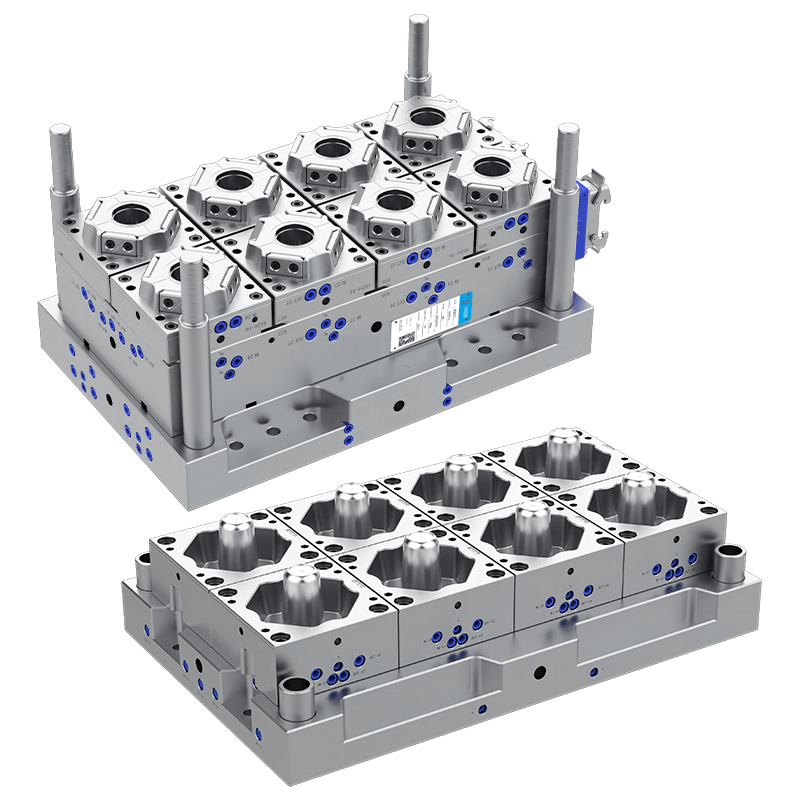
Plastic cups are everywhere. Coffee shops. Fast food restaurants. Office water coolers. They are thin, light, and cheap. A mould for plastic cup makes this possible. The mould shapes molten plastic into a cup in seconds. One mould can produce millions of cups before it wears out.
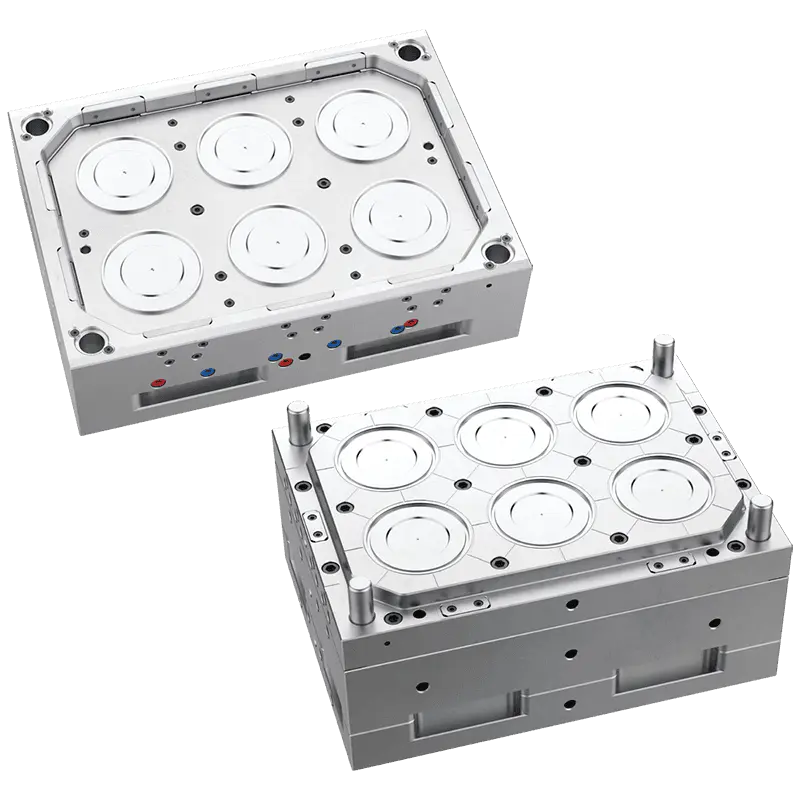
What a Plastic Cup Mould Does
The mould is a steel tool that fits into an injection molding machine. Molten plastic shoots into the mould at high speed. The cavity fills in a fraction of a second. The plastic cools. The mould opens. The cup drops out. The whole cycle takes 3 to 5 seconds.
The mould has multiple cavities. A small mould has 4 cavities. A large mould has 16 or 24. Each cavity makes one cup. More cavities means more cups per cycle. More cups per hour.
Types of Plastic Cups and Their Moulds
Disposable drinking cups are the most common. Thin walls. Lightweight. A mould for plastic cup with high cavitation produces these cups quickly.
Yogurt and pudding cups are thicker. They have a rim for a foil seal. A mould for plastic cup for yogurt cups has features for the sealing rim. The rim must be flat. The foil seals tightly.
Coffee cups are insulated. They have a ribbed or textured surface. A mould for plastic cup for coffee cups has a textured cavity. The texture is part of the mould surface.
What to Look for in a Plastic Cup Mould
Cavity count affects output. More cavities mean higher output. A mould for plastic cup with 16 cavities produces four times as many cups as a 4-cavity mould. The mould costs more. The machine needs more clamping force.
Steel quality determines mould life. The mould runs millions of cycles. Hardened steel lasts longer. The cavity surface stays smooth. The cups come out clear. Soft steel wears out. The cups become cloudy. The mould is scrap.
Cooling channel design affects cycle time. Faster cooling means faster cycles. A mould for plastic cup with conformal cooling channels cools evenly. The channels follow the shape of the cup. Cycle time drops.
Gate design hides the mark. The gate leaves a mark on the cup. A good mould puts the gate on the bottom or the side. The mark is hidden. The cup looks clean.
Here is what to check in a plastic cup mould:
- Cavity count — matches your output needs
- Steel quality — hardened steel for durability
- Cooling design — conformal cooling for fast cycles
- Gate placement — hidden mark on bottom or side
Why Choose a Quality Mould
A quality mould runs faster. It produces more cups per hour. The cups are consistent. The surface is smooth. The mould lasts for years. A cheap mould runs slow. It produces defective cups. It wears out quickly.
How Long Does a Plastic Cup Mould Last?
A well-made mould with hardened steel lasts for millions of cycles. 5 million to 10 million cycles is common. Some moulds last 20 million cycles with proper maintenance.
Regular cleaning extends mould life. The cooling channels need descaling. The moving parts need lubrication. Proper maintenance keeps the mould running.
How Much Does a Plastic Cup Mould Cost?
The cost depends on cavity count, steel quality, and cooling design. A 4-cavity mould might cost $5,000 to $10,000. A 16-cavity mould might cost $20,000 to $40,000. A 24-cavity mould with conformal cooling might cost $50,000 or more.
A mould for plastic cup is an investment. A quality mould pays for itself quickly. It runs faster. It produces more cups. The cups are consistent. The mould lasts for years.
A mould for plastic cup is an essential tool for cup production. Choose the right cavity count. Choose quality steel. Choose good cooling. A good mould runs fast. It makes good cups. It lasts for years. That is what a mould for plastic cup delivers. High-speed production. Consistent quality. Long service life. In cup manufacturing, the mould is the key. A good mould makes the difference. That is what buyers look for. That is what a quality mould provides.
Contact Us
Email: [email protected]; Or fill out the contact form below.

Yongkang Huashun Mould Co., Ltd. is a technology-based enterprise specializing in the production of thin-walled injection molds.
PRODUCT
- Disposable Plastic Round Food Container Moulds
- Disposable Plastic Square Food Container Moulds
- Disposable Bubble Tea Plastic PP Cup Mould Series
- Disposable Plastic Knife Fork And Spoon Mould Series
- Disposable Plastic Multi-grid Food Container Mould Series
- Disposable Plastic Portion Cup Mould Series
- Disposable Plastic Cup Mould Series
 Email:
  Phone: +86-18067655796
 Tel: +86-0579-87137609
 Add: No. 218, Shangpu Road, Yongkang Economic Development Zone, Jinhua City, Zhejiang Province, China


