
 English
 中文简体
中文简体 русский
 Español
 Français
What Are the Differences Between Thin Wall Injection Moulding and Others?
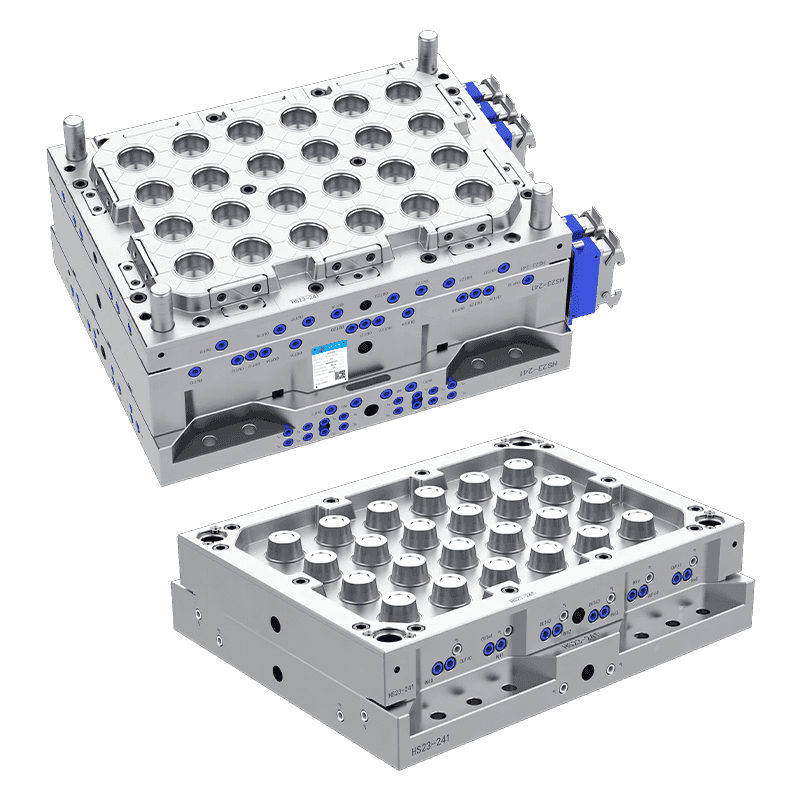
Thin Wall Injection Moulding has become increasingly popular in industries like consumer electronics, automotive, packaging, and medical devices due to its ability to produce lightweight, high-performance parts quickly and efficiently. Unlike traditional injection moulding, which typically involves thicker walls for part strength and durability, Thin wall injection moulding focuses on creating parts with much thinner walls, usually under 1mm. This technique has several distinct advantages, particularly in terms of material efficiency, speed, and cost, but it also presents unique challenges.
Wall Thickness and Material Use
One of the primary differences between thin wall injection moulding and traditional injection moulding lies in the wall thickness of the finished parts. Thin wall injection moulding typically produces parts with walls as thin as 0.2mm to 1mm, which is much thinner compared to traditional moulding methods that generally use wall thicknesses of 2mm or more. This results in significant material savings and reduced weight, which is crucial for products like packaging, medical devices, and automotive components, where lightweight materials are essential.
The use of thinner walls, however, requires a more precise control over the injection process to ensure uniform material flow and to avoid defects such as warping or sink marks. Traditional injection moulding techniques, which often deal with thicker materials, do not face these same challenges and tend to be less sensitive to small variations in wall thickness.
Production Speed and Efficiency
Thin wall injection moulding allows for faster cycle times compared to traditional moulding processes. The reduced thickness of the parts means that less material needs to be injected and cooled, which speeds up the overall production process. As a result, TWIM can produce a higher volume of parts in less time, making it an ideal choice for high-demand industries such as packaging, where large quantities of parts need to be produced quickly.
In contrast, traditional injection moulding processes tend to have longer cycle times due to the need for more extensive cooling periods, especially when dealing with thicker-walled parts. The production speed difference can be significant, making Thin wall injection moulding a more efficient choice when high-volume production is needed.
Thin Wall Injection Moulding: Key Features and Benefits
Material Efficiency and Cost Savings
Thin wall injection moulding offers significant material efficiency, which bring about cost savings. Since thinner walls use less plastic material, there is a direct reduction in the overall material cost per part. In industries where material costs are a significant concern, such as packaging or automotive, this reduction can result in considerable savings over time.
Additionally, the high material efficiency of TWIM often reduces the environmental impact by decreasing plastic waste and the amount of raw material required for production. This makes Thin wall injection moulding a more sustainable option compared to traditional moulding techniques.
Design Flexibility and Lightweighting
Thin wall injection moulding allows for greater design flexibility, particularly in terms of lightweighting. The thinner walls enable manufacturers to design more intricate, lightweight parts that still meet the required strength and functionality. For example, in packaging, thinner containers mean that less material is used without compromising the structural integrity needed for protecting the contents.
The ability to create thin-walled parts with complex shapes and features also offers designers more creative freedom. Traditional injection moulding often limits part complexity due to the increased material requirements and longer cooling times associated with thicker walls. Thin wall injection moulding, however, enables the production of parts that are both lightweight and intricate, which is beneficial in industries like electronics and medical devices, where both form and function are critical.
Challenges in Process Control
Despite its advantages, thin wall injection moulding comes with challenges. The key issue is the precise control required to ensure that the plastic flows evenly throughout the mould cavity. Since the walls are thinner, even slight variations in material flow can bring about defects such as inconsistent wall thickness, air pockets, or surface imperfections like sink marks or warping.
To achieve the necessary precision, Thin wall injection moulding requires advanced technology and equipment, including high-precision injection moulding machines and advanced mould designs. These machines must be capable of injecting the material at a high speed while maintaining a controlled temperature to prevent issues during the cooling phase.
Speed and Efficiency in High-Volume Production
Thin wall injection moulding is highly advantageous when it comes to high-volume production. The faster cycle times, due to the thinner walls and less material to be injected, allow manufacturers to produce a large number of parts in a short amount of time. This is especially useful in industries like packaging, where millions of containers or parts are required for each production run.
Contact Us
Email: [email protected]; Or fill out the contact form below.

Yongkang Huashun Mould Co., Ltd. is a technology-based enterprise specializing in the production of thin-walled injection molds.
PRODUCT
- Disposable Plastic Round Food Container Moulds
- Disposable Plastic Square Food Container Moulds
- Disposable Bubble Tea Plastic PP Cup Mould Series
- Disposable Plastic Knife Fork And Spoon Mould Series
- Disposable Plastic Multi-grid Food Container Mould Series
- Disposable Plastic Portion Cup Mould Series
- Disposable Plastic Cup Mould Series
 Email:
  Phone: +86-18067655796
 Tel: +86-0579-87137609
 Add: No. 218, Shangpu Road, Yongkang Economic Development Zone, Jinhua City, Zhejiang Province, China


