
 English
 中文简体
 русский
 Español
 Français

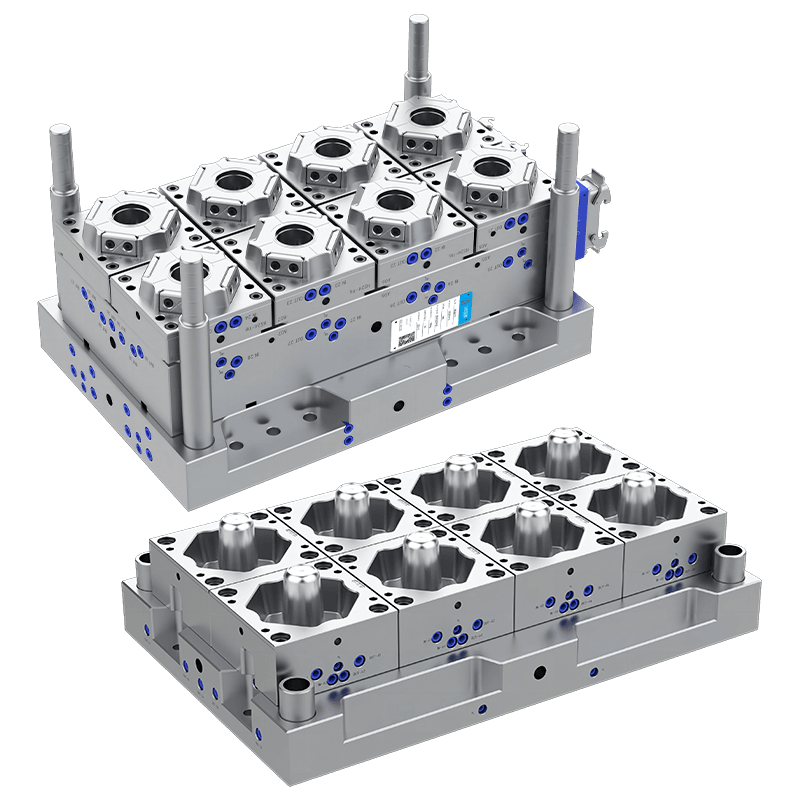
Mould For Plastic Cup Factory: The Tooling That Sets the Speed of the Line
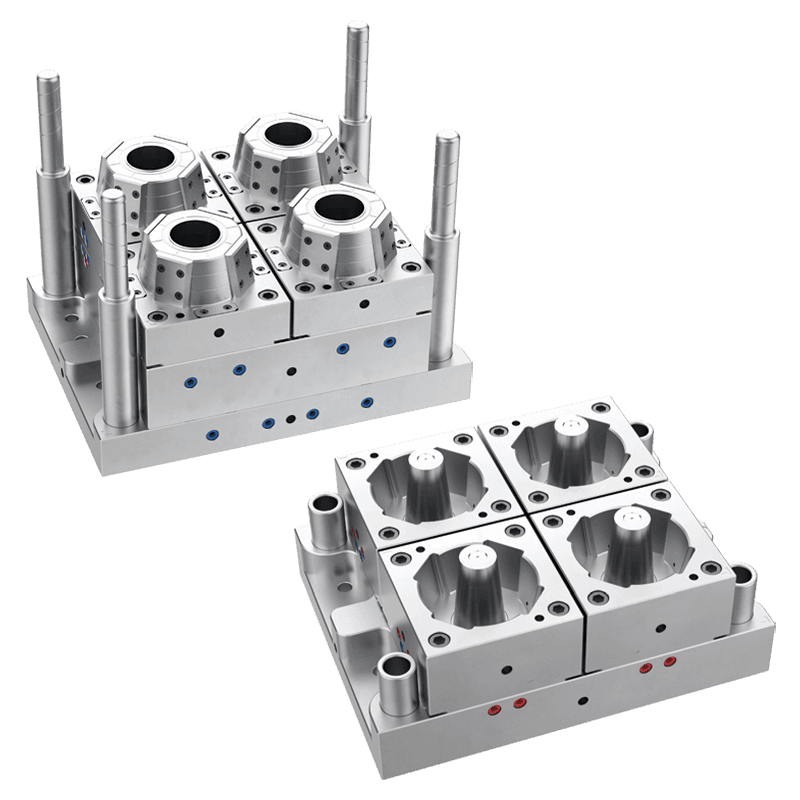
A plastic cup mould determines how fast the cup line runs, how many cups come out per cycle, and how many of them pass inspection. The cup itself is a thin wall shell with a rim that has to seal against the film, a taper that lets it stack, and a base that sits flat. A mould for plastic cup factory is built around those three features, and the cycle time is what pays for the tool.
Cavitation Decides the Output
A single-cavity cup mould is for the sample and the short run. A production mould runs 16, 32, or 48 cavities, and the hot runner system has to deliver the same pressure and temperature to every cavity. The mould for plastic cup factory that balances the runner produces cups of identical weight from every cavity.
An unbalanced runner fills some cavities late and leaves short shots at the far end. The operator slows the injection to fill the last cavity, and the cycle time climbs for every cup.
Cooling the Core Is the Bottleneck
The core forms the inside of the cup, and it sits surrounded by the part with nowhere for the heat to go. The cavity side cools through the drilled channels close to the surface. The core needs a bubbler or a spiral baffle to pull heat from the center.
A mould for plastic cup factory with the properly cooled core runs the shorter cycle. A core that runs hot forces the longer cooling time, and the cups come out warped at the rim.
The Rim Has to Stay Round
The rim is the sealing surface. The film presses onto it, and the seal fails if the rim is not flat and round. The thin wall makes the rim the weakest part of the cup, and the ejection has to push on the rim without deforming it.
A stripper ring or a ring of ejector pins on the rim releases the cup evenly. Ejector pins on the base would punch through the thin bottom.
The Stacking and the Taper
The cups stack in the dispenser and in the sleeve. The taper and the stacking shoulder have to match the cup below and the cup above. The mould for plastic cup factory machines the taper and the shoulder so the cups nest without jamming and pull apart without sticking.
What the factory has to deliver:
- Balanced hot runner for the multi-cavity fill
- Core cooling with the bubbler or the spiral baffle
- Rim machined flat and round for the seal
- Stripper ring ejection without the distortion
- Stacking taper and shoulder matched to the cup system
- Material-specific shrinkage allowance
Where the Cups Go
The water cup, the bubble tea cup, the portion cup, the dessert cup. Each one runs on its own mould and its own line, and the mould that hits the cycle time makes the cup affordable.
When the Cup Fails
The rim warps and the seal leaks. The cup sticks and the ejector pins punch through the bottom. The wall shorts because the gate was too small or the runner was unbalanced. The cups jam in the stack because the taper was wrong. Each one traces back to the mould design, not the press operator.
Contact Us
Email: [email protected]; Or fill out the contact form below.

Yongkang Huashun Mould Co., Ltd. is a technology-based enterprise specializing in the production of thin-walled injection molds.
PRODUCT
- Disposable Plastic Round Food Container Moulds
- Disposable Plastic Square Food Container Moulds
- Disposable Bubble Tea Plastic PP Cup Mould Series
- Disposable Plastic Knife Fork And Spoon Mould Series
- Disposable Plastic Multi-grid Food Container Mould Series
- Disposable Plastic Portion Cup Mould Series
- Disposable Plastic Cup Mould Series
 Email:
 Phone: +86-18067655796
 Tel: +86-0579-87137609
 Add: No. 218, Shangpu Road, Yongkang Economic Development Zone, Jinhua City, Zhejiang Province, China


