
 English
 中文简体
中文简体 русский
 Español
 Français
How Does Food Container Mold Affect Food Safety?
A container that passes visual inspection can still carry contamination that originates not from handling or transport, but from the tool used to produce it. Manufacturers of food packaging know the frustration of containers that pass dimensional checks but draw regulatory attention at the material safety or surface finish stage. The mold that shapes each container determines far more than its geometry: it sets the surface quality, the material distribution, the ejection behavior, and ultimately whether the container can be produced cleanly, used safely, and cleaned reliably across its service life. Understanding how Food Container Mold design and construction influence hygiene outcomes is not an abstract technical concern - it is a compliance and quality management issue that affects every unit produced.
What Is a Food Container Mold and Why Does It Matter?
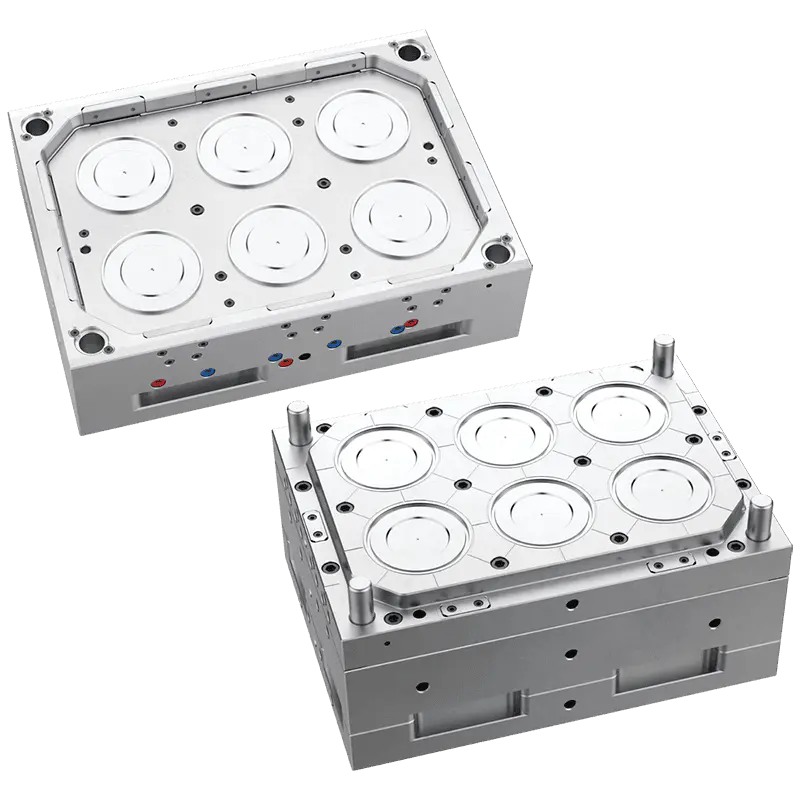
Defining the Role of the Mold in Food Packaging Production
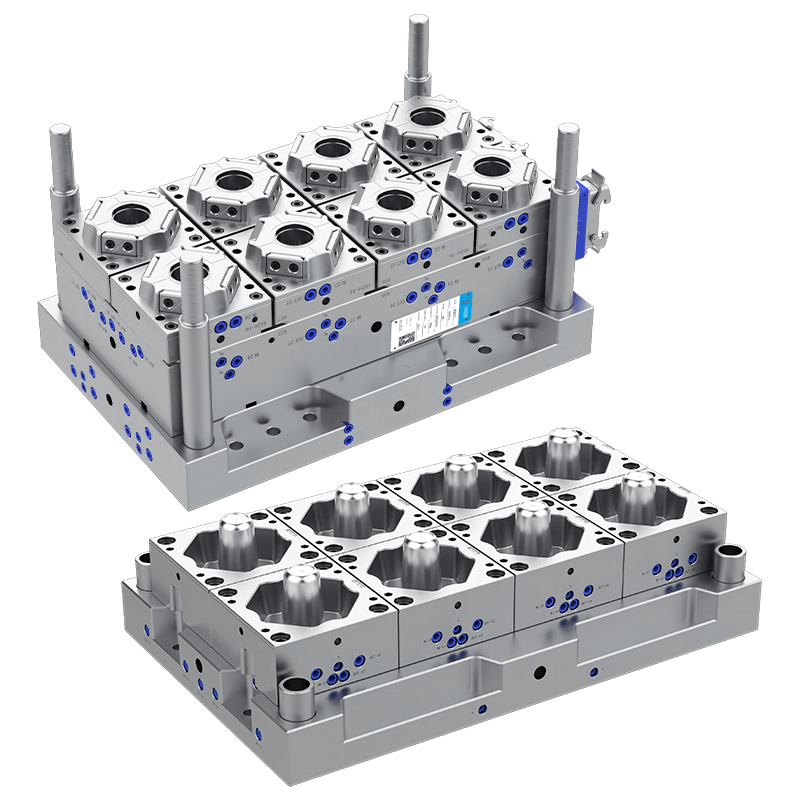
A Food Container Mold is a precision-machined industrial tool used in injection molding, blow molding, or compression molding processes to form plastic containers used for food storage, transport, and retail packaging. The mold does not touch the food directly, but it determines the geometry, surface finish, and material distribution of every container it produces.
Because food containers must meet hygiene and food-contact safety standards, the mold must be capable of producing containers that conform to those standards consistently - not occasionally. A mold that produces flash, inconsistent wall thickness, or surface defects in even a small percentage of its output creates downstream risk that inspection and rejection cannot fully eliminate.
The Mold as the Root of Container Quality
Container quality issues that appear to be processing problems often originate in mold design or condition:
- Surface roughness that exceeds acceptable limits for food contact
- Sink marks or voids that create recesses where food residue can accumulate
- Parting line irregularities that create edges difficult to clean or that harbor bacteria
- Uneven wall thickness that affects container rigidity and structural integrity during use
Tooling designed and maintained to produce clean, uniform, defect-free containers is the foundation of a hygienic production process.
How Does Mold Surface Finish Affect Hygienic Performance?
The Link Between Surface Texture and Bacterial Adhesion
Bacteria adhere to surfaces through a combination of physical and chemical mechanisms. Surface roughness plays a significant role: irregular surface features at the microscopic level provide anchor points for bacterial cells and food particles that cleaning cannot reach effectively.
A mold cavity with a high-polish, mirror-grade surface finish produces containers with a correspondingly smooth internal surface. Smooth container surfaces:
- Reduce the number of sites where food residue can accumulate
- Allow cleaning agents to contact the full surface without obstruction
- Support effective sterilization where that is required in the packaging application
- Reduce biofilm formation risk over repeated use in reusable container applications
Surface Degradation and Its Consequences
Mold cavity surfaces degrade over production cycles. Abrasion from molten plastic flow, thermal cycling, and mechanical stress all contribute to surface roughening over time. As the mold cavity surface deteriorates, the container surface it produces deteriorates correspondingly.
For food packaging manufacturers, mold maintenance schedules should include periodic inspection and re-polishing of cavity surfaces to confirm that container surface finish remains within specification. A degraded mold that continues in production will systematically produce containers with lower hygienic performance than the design intent.
What Materials Are Used in Food Packaging Molds?
Steel Grade Selection and Its Effect on Mold Hygiene
The steel used to machine a Food Container Mold affects its resistance to corrosion, its polishability, and its long-term dimensional stability. Common considerations:
- Stainless steel grades: provide inherent corrosion resistance and are appropriate for molds that encounter moisture during production or cleaning. They accept fine polishing and maintain surface quality over longer service periods.
- Pre-hardened tool steels: offer high hardness for wear resistance and dimensional stability over high production volumes. Surface finish quality depends on the specific grade and the polishing process applied.
- Hardened tool steels: used where very high cavity pressures or abrasive materials require maximum wear resistance. Can achieve fine surface finishes with appropriate processing.
The material choice is not merely a tooling consideration - it directly affects whether the mold can be maintained in a condition that produces food-safe container surfaces throughout its production life.
Coatings and Surface Treatments
Some Food Container Molds incorporate surface coatings or treatments to enhance corrosion resistance, reduce friction during ejection, or extend polished surface life:
- Hard chrome plating extends wear resistance but requires careful application to maintain dimensional precision
- Physical vapor deposition coatings can provide corrosion and wear resistance without significant dimensional change
- Nitriding treatments harden the surface layer to reduce wear while the core retains toughness
For food contact applications, any coating must be confirmed as stable and non-migrating under the processing temperatures and conditions of the molding cycle.
Mold Design Features That Support Hygiene in Production
Why Parting Line Design Affects Container Cleanliness
The parting line is where the two halves of the mold meet. At this junction, even small misalignment or wear produces a raised edge or seam on the container surface. In food containers, parting lines on interior surfaces create edges where:
- Food residue accumulates during use
- Cleaning implements cannot reach consistently
- Bacterial colonies can establish and survive repeated standard cleaning cycles
Good mold design positions parting lines on exterior surfaces or edges where they do not create interior hygiene risks. Precision machining and assembly of mold halves ensures that parting line gaps are within the tolerance range that produces minimal flash or step edges on the container.
Gate Design and Its Effect on Container Surface Quality
The gate is the entry point through which molten plastic enters the mold cavity. Gate design affects:
- Where the injection point mark appears on the finished container
- Whether the gate mark creates a raised or recessed feature that is difficult to clean
- How material flows through the cavity, which affects surface quality and dimensional consistency
For food containers, hot runner systems that eliminate conventional gate marks are preferred where budget and production volume justify the investment. Where cold runner systems are used, gate location and geometry should be designed to place the gate mark on an exterior surface that does not contact food.
Venting and Its Role in Surface Quality
Adequate mold venting allows air and gas to escape from the cavity as it fills with molten plastic. Insufficient venting traps gas, which:
- Burns the plastic surface locally, creating discoloration and surface defects
- Produces short shots where the cavity does not fill completely
- Creates surface irregularities that compromise both aesthetics and hygiene
Venting channels must be sized to allow gas escape without allowing molten plastic to enter them - a precision design balance that affects both production yield and container surface quality.
Compliance Considerations in Mold Design for Food Packaging
Food-Contact Regulatory Standards and Mold Implications
Food containers must meet food-contact safety standards in their target markets. The mold must be capable of consistently producing containers from materials approved for food contact and in a condition that maintains those materials' safety properties.
Key compliance considerations that trace back to mold design and material:
- The mold material and any coatings must not contaminate the molten plastic during processing
- The mold must produce containers within the dimensional tolerances that ensure correct closure, sealing, and stacking behavior
- The surface finish the mold produces must be compatible with the hygiene performance expected of the container in its end use
How Mold Precision Affects Material Distribution and Safety
Uneven wall thickness in a food container is not merely a cosmetic defect. It affects:
- Structural integrity under load, which matters for stacking and transport safety
- How effectively the container can be sterilized - thinner sections may deform under heat sterilization conditions
- Whether the container meets the weight and material content specifications required for regulatory compliance
A mold with precisely machined cavity dimensions, accurate temperature control channels, and consistent material flow paths produces containers with uniform wall distribution. A mold with worn or imprecise cavities produces containers with variable wall distribution that creates downstream compliance and performance risk.
Mold Design and Maintenance Practices That Protect Food Safety
Step-by-Step Approach to Maintaining Mold Hygiene Performance
Food packaging manufacturers benefit from a structured mold maintenance program that addresses the hygiene-relevant aspects of mold condition:
- Establish a cavity surface inspection schedule - define the production cycle interval at which cavity surface finish is checked against the original specification
- Document surface condition at each inspection - photographic and profilometer records allow trend analysis before visible degradation affects container quality
- Implement re-polishing protocols - define the surface roughness threshold that triggers cavity re-polishing rather than waiting for visual defects to appear in production
- Inspect parting lines and gate areas - these high-wear locations should be checked for step edges or flash that will transfer to container surfaces
- Verify cooling channel integrity - blocked or degraded cooling channels create local temperature variation that affects material distribution and surface quality
- Maintain assembly records - documenting mold half alignment at each disassembly and reassembly supports consistent parting line performance
Cleaning the Mold Itself
Residue on mold cavity surfaces from release agents, carbonized material, or contamination affects surface quality in production. Mold cleaning procedures for food packaging applications should:
- Use cleaning agents compatible with the mold steel and any coatings
- Avoid abrasive cleaning methods that scratch polished surfaces
- Be performed at defined intervals rather than only when visible contamination is present
- Include inspection of venting channels to confirm they are free of residue
Comparing Mold Design Approaches for Food Packaging Applications
| Design Element | Standard Approach | Hygiene-Optimized Approach |
|---|---|---|
| Cavity surface finish | Standard machined finish | Mirror-polished to food-contact grade |
| Parting line placement | Positioned for manufacturing convenience | Positioned to avoid interior food-contact surfaces |
| Gate design | Cold runner with visible gate mark | Hot runner eliminating gate mark on interior surfaces |
| Venting | Basic venting channels | Precision venting sized to prevent gas traps without flash |
| Steel selection | General tool steel | Corrosion-resistant grade for sustained surface quality |
| Cooling channel design | Standard layout | Conformal cooling for uniform wall distribution |
| Maintenance schedule | Reactive - when defects appear | Preventive - interval-based inspection and re-polishing |
What Procurement Teams Should Evaluate When Sourcing Molds
Key Questions for Supplier Assessment
For food packaging manufacturers evaluating mold suppliers, the technical conversation should cover:
- What steel grades are used for cavity and core components, and why?
- What surface finish specification is achieved at delivery, and how is it verified?
- How are parting lines and gate locations designed relative to the container's food-contact surfaces?
- What cooling system design approach is used, and how does it support uniform wall distribution?
- What maintenance documentation is provided to support the buyer's mold care program?
- What warranty terms apply to dimensional conformance and surface quality at delivery?
Evaluating Mold Supplier Capability for Food Applications
Suppliers experienced in food packaging molds will understand regulatory material requirements, have documented surface finish verification processes, and be able to provide reference projects in similar applications. Those without specific food packaging experience may produce dimensionally accurate molds that nonetheless create hygiene challenges through surface finish, gate design, or parting line placement decisions that are acceptable in non-food applications but problematic for food contact.
Securing a Mold Partner Who Understands Food Safety Requirements
The mold is not the product that reaches the consumer - but it determines whether the product that does reach the consumer is safe, hygienic, and consistently produced. A mold that is precisely designed, correctly specified for food-contact applications, and properly maintained across its production life is the foundation of a food packaging manufacturing operation that meets regulatory requirements and reduces contamination risk. Conversely, a mold that is selected without attention to surface finish, gate and parting line design, and material selection will produce containers that carry hygiene risk even when the nominal material and production process are compliant.
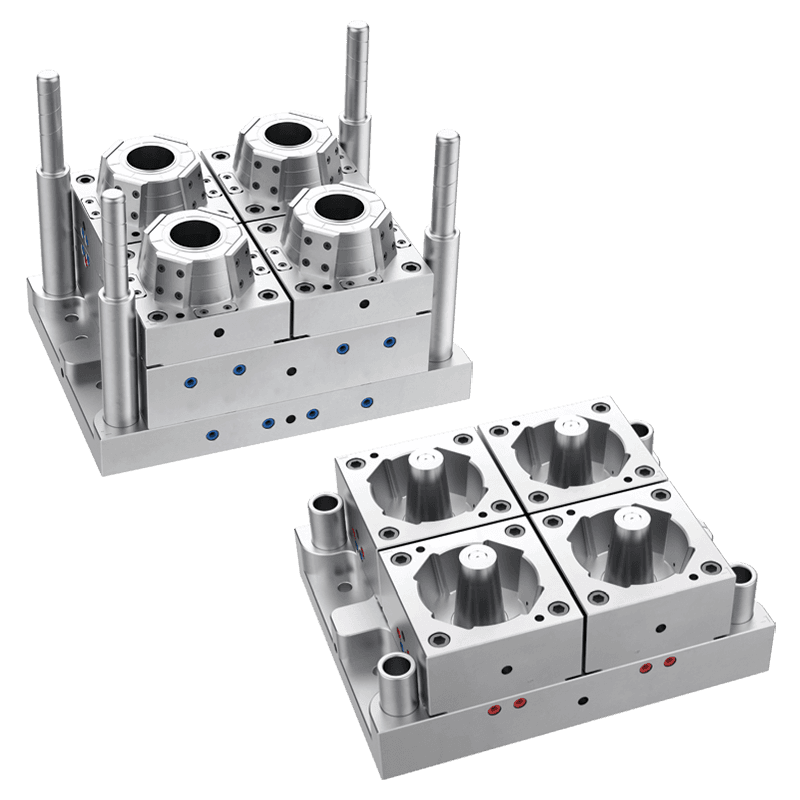
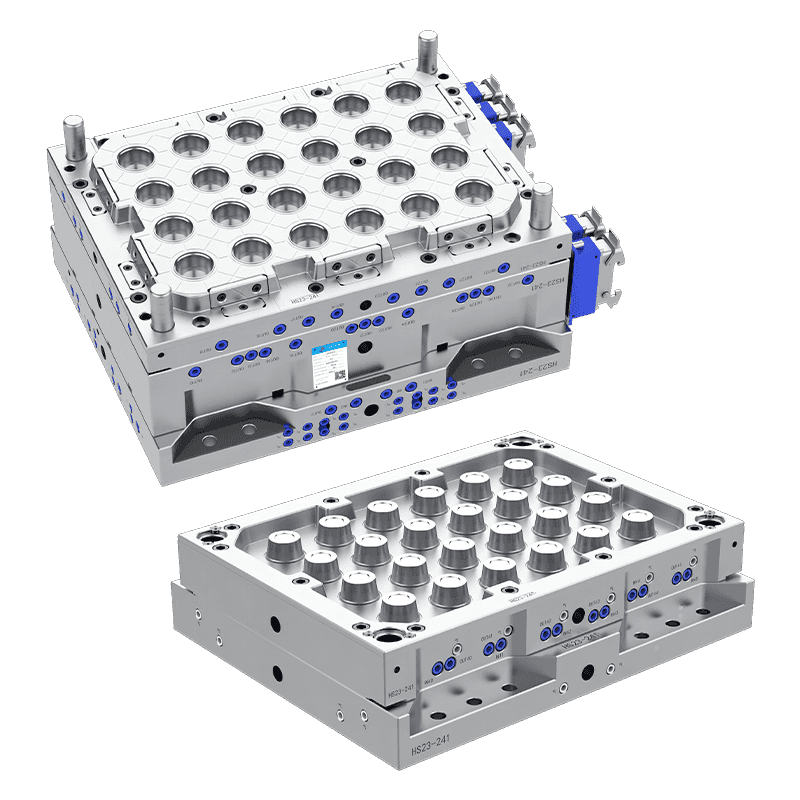
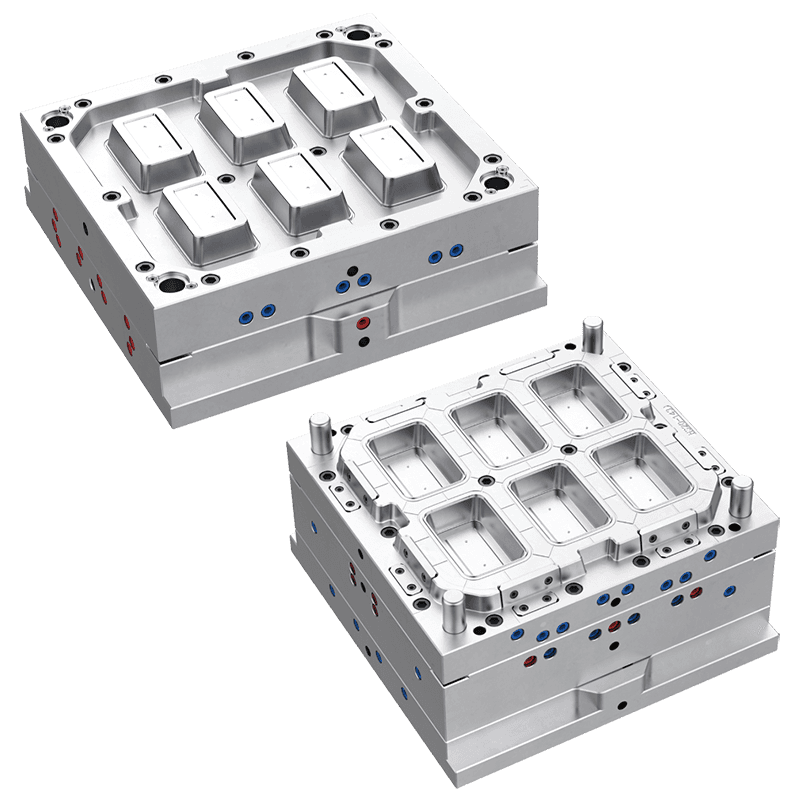
Yongkang Huashun Mould Co., Ltd. designs and manufactures Food Container Mold solutions for injection molding applications across a range of container types, sizes, and production volume requirements. The team supports buyers through material selection, cavity design review, surface finish specification, and mold qualification for food-contact applications. If you are developing a new container line, replacing worn tooling, or evaluating whether your current mold design is optimized for hygienic production, reaching out with your container specification and production requirements is the practical starting point for a technical conversation that addresses both performance and compliance.
Contact Us
Email: [email protected]; Or fill out the contact form below.

Yongkang Huashun Mould Co., Ltd. is a technology-based enterprise specializing in the production of thin-walled injection molds.
PRODUCT
- Disposable Plastic Round Food Container Moulds
- Disposable Plastic Square Food Container Moulds
- Disposable Bubble Tea Plastic PP Cup Mould Series
- Disposable Plastic Knife Fork And Spoon Mould Series
- Disposable Plastic Multi-grid Food Container Mould Series
- Disposable Plastic Portion Cup Mould Series
- Disposable Plastic Cup Mould Series
 Email:
  Phone: +86-18067655796
 Tel: +86-0579-87137609
 Add: No. 218, Shangpu Road, Yongkang Economic Development Zone, Jinhua City, Zhejiang Province, China


